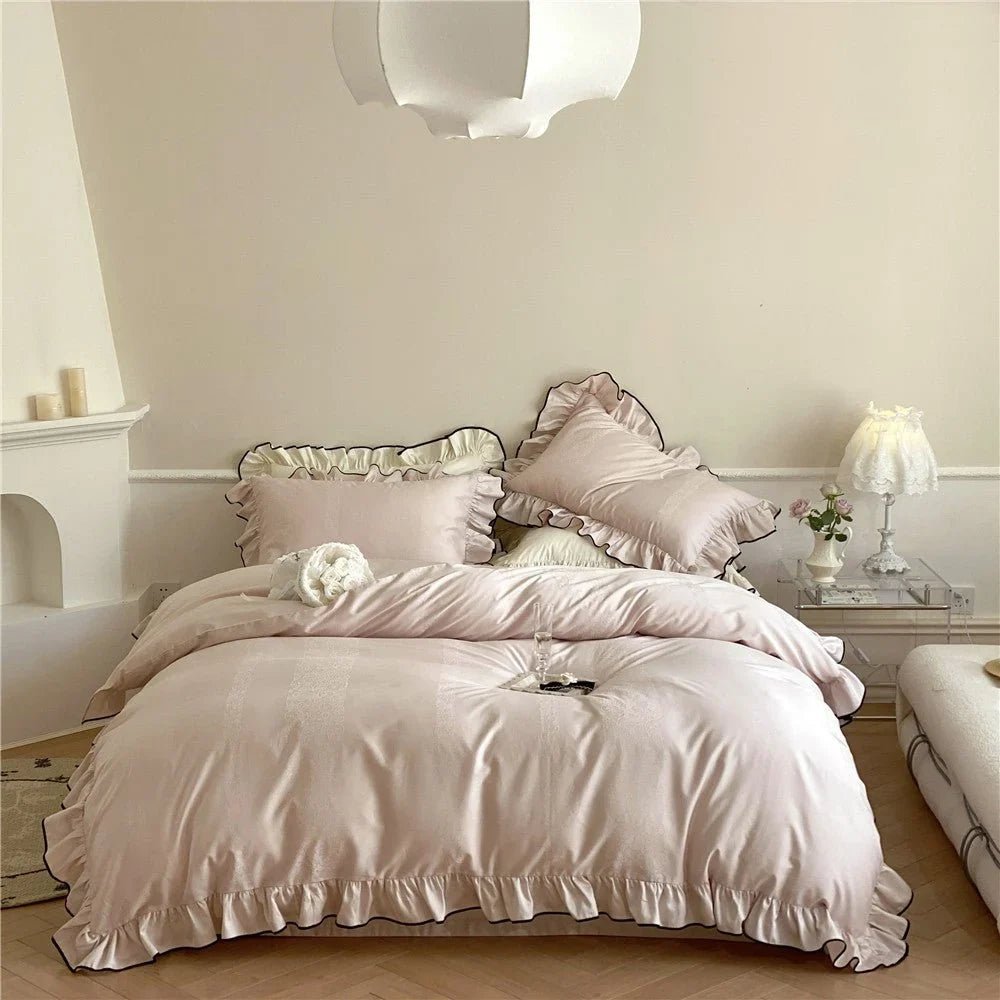
Why Does New Bedding Still Feel Cold Even After Adding More Layers


You bought the duvet. You bought the throw. You added the extra pillows for your new bedding, the folded blanket at the foot of the bed, maybe even a bed runner because Pinterest told you to.
And it still feels cold.
Not temperature-cold. Cold in the way a hotel room is cold before you unpack. Cold in the way a bed looks staged instead of lived-in. You keep adding pieces expecting the room to finally feel warm, and instead it just feels... more.
Here's the part nobody tells you: layering more bedding does not automatically make a bed feel warmer. Quantity was never the fix. The problem is almost never how much you have on the bed. It's what those layers are made of, what colors they're in, and what light they're sitting under.
Table of contents
More Layers Isn't the Same as More Warmth


The instinct makes sense. Cold bed, add stuff. But warmth, the visual and emotional kind, isn't built by volume. It's built by contrast in texture.
A bed with five layers of the exact same smooth, flat-woven fabric in the same weight will still look and feel one-note, even piled high. Your eye and your hand both register sameness as sterile. What actually reads as warm is texture doing different things at once: something smooth against something nubby, something structured against something loose and slouchy, something with a bit of sheen next to something completely matte.
This is why a single waffle-weave throw folded over a plain duvet can do more than adding a second flat blanket ever will. It's not about more fabric. It's about more contrast.
Easy ways to build texture contrast without adding more bulk:
- Pair a smooth, sateen-finish duvet with one knit or waffle-weave throw
- Add a structured element (a bolster or piped pillow) next to something soft and slouchy
- Look for at least one matte fabric and one with a slight sheen on the same bed
- Skip a second flat blanket if you already have one, add texture instead of repetition
If your current bedding is all one texture, the fastest fix isn't buying more of the same. Something like the our Fresh Plaid Washed Cotton Bedsheets gives you that smooth, structured base layer, and it's the ideal foundation to build texture on top of, not compete with, and what's more, it comes in 15 different colours to choose from, flat and fitted.
For the structured base
Why All-White or All-Cool Bedding Reads as Cold No Matter What You Add


Color temperature is doing more work than people give it credit for. White, icy blue, cool gray, stark black and white combinations, these read as clean, but "clean" and "warm" are not the same feeling, and a lot of people are chasing the first while wanting the second.
Cool tones visually recede and flatten a space. Warm tones (rust, camel, terracotta, warm taupe, deep olive, muted mustard) visually advance, which is a fancy way of saying they make a room feel closer, fuller, and more held. This is the actual reason a bright white bedroom photographed for a catalog can look gorgeous and still feel a little clinical to sleep in every night.
You don't need to abandon a neutral palette to fix this. You need at least one warm anchor tone in the mix, ideally in your largest layer, since that's the one your eye lands on first.
Quick ways to warm up a cool-toned bed without a full overhaul:
- Add one warm-toned layer (rust, camel, or terracotta) to your largest piece, usually the duvet
- Swap a stark white pillowcase for a warm ivory or oat tone
- Avoid pairing two cool tones together, like icy blue with stark gray
- Keep at least one earthy neutral in the mix even if the rest stays pastel or white
The Anya Striped Jacquard Bedding Set works well here because it lets you stay in a soft, neutral palette while still leaning into warmer undertones instead of stark cool ones, which is the difference between a bed that photographs well and a bed that actually feels good to fall into.
To stay warm without ditching the neutrals
The Lighting in Your Room Is Undoing Your New Bedding


This is the one almost nobody checks first, and it's often the actual culprit. You can have perfect texture and the warmest color palette on the market, and it will still look cold under the wrong light.
Overhead lighting, especially cool-white or daylight-toned bulbs, flattens color and drains warmth out of fabric. It's the same reason clothes look different in a dressing room than they do outside. Warm bedding under cool overhead light can genuinely look gray and lifeless, even when the fabric itself is a rich, warm color.
The fix is layered lighting, not brighter lighting. A bedside lamp with a warm bulb (look for "soft white" or a lower Kelvin rating, closer to 2700K) sitting at bed height does more to make a bed look inviting than almost anything you add to the mattress. Light coming from the side and below, instead of straight down from the ceiling, is what makes a bed look like it belongs in a photo you'd want to be in.
Small lighting swaps that change how warm a bed looks:
- Replace overhead daylight or cool-white bulbs with a warm bulb around 2700K
- Add a bedside lamp at bed height instead of relying on ceiling light alone
- Turn off overhead lighting entirely in the evening and use lamp light only
- Notice how your bedding color shifts under each light before assuming the fabric is the problem
Before you buy another throw pillow, turn off the overhead light and try something like our Hanging Donut Lamp next to the bed. Then look again. A lot of "cold bedding" problems is sure to disappear right there.
To accentuate the new bedding
A "Finished" Bed and a Warm Bed Are Not the Same Thing


There's a specific kind of cold that comes from a bed being too perfect. Corners pulled tight, pillows lined up like soldiers, nothing overlapping, nothing draped. It looks finished. It doesn't look warm.
Warmth comes from a bed that looks like it's actually being used, or could be. That means asymmetry: a throw that's half-folded instead of perfectly squared, pillows layered front to back instead of side by side in a straight row, a blanket that's slightly rumpled instead of ironed flat. Perfect symmetry reads as staged. Slight imperfection reads as lived-in, and lived-in is what your eye interprets as warm.
This is also where scale matters. A bed with only one size of pillow, all lined up the same, looks flat no matter how nice the bedding underneath is. Mixing at least two or three sizes, and letting them overlap instead of sit in a perfect row, is what gives a bed depth.
Small styling shifts that make a bed feel warmer, not just neater:
- Let a throw fold naturally instead of squaring off every corner
- Mix at least two or three pillow sizes and let them overlap slightly
- Skip perfect symmetry on both sides of the bed, minor imbalance reads as lived-in
- Fold back a top layer to expose a second color or texture underneath
A duo-style reversible set, like the Emma Duo Striped Jacquard Bedding Set, makes this easier because you get two different colorways to work with on one bed, so you can fold one layer back to expose the second tone instead of adding an entirely new piece just to create contrast.
For more reversible duos
Final Thoughts


You didn't do anything wrong by adding layers to your new bedding. That instinct isn't the problem. The problem is that "more" was never the actual variable that makes a bed feel warm.
Texture contrast, color temperature, the light you're standing under, and a little bit of intentional imperfection: those are the four things actually doing the work. A bed with fewer pieces and the right mix of all four will beat a bed piled high with more of the same, every time.
Your bedding isn't cold. It's just missing contrast.
If you're working on the rest of the room too, not just the bed, read "Fall Color Trends: What to Choose for Your Bedroom" for a deeper look at which warm tones actually hold up in a bedroom long-term, not just in a single season.
Summary:
A bed can look fully layered and still feel visually cold if every piece shares the same texture, since sameness reads as flat rather than cozy.
Cool-toned and all-white palettes visually recede and can make a bed feel clinical, even when the styling is technically correct, so at least one warm anchor tone matters.
Overhead cool-white lighting drains warmth out of even the best bedding, and warm, layered lighting at bed height does more than most people expect.
A bed styled with perfect symmetry can look staged rather than inviting; slight imperfection and mixed pillow scale are what make a bed read as warm and lived-in.
Looking for another Read?


FAQ:
WHY DOES MY BED STILL FEEL COLD EVEN WITH MULTIPLE LAYERS OF BEDDING?
A bed feels cold when every layer shares the same texture, temperature, or color, even if you've added several pieces. True warmth comes from contrast — smooth against nubby, warm tones against neutrals, and layered lighting — not from how many layers are on top of the mattress.
WHAT MAKES A BED LOOK COLD EVEN WHEN THE BEDDING IS HIGH QUALITY?
Good bedding can still look cold under the wrong lighting or in an all-cool color palette. Overhead cool-white light drains warmth from even rich, well-made fabric, and an all-white or icy-toned bed will read as clean rather than cozy no matter how many layers you add.
HOW DO I MAKE A LAYERED BED FEEL WARMER WITHOUT BUYING ALL NEW BEDDING?
Start with what's already on the bed: swap overhead lighting for a warm bedside lamp, add one texture that contrasts with what you have (a knit throw over a smooth duvet, for example), and let the styling look slightly imperfect instead of perfectly symmetrical.
Anything We Missed?
Thanks for reading till the end — we hope it brought a little calm and inspiration to your day.
Discover more: Inspiration Blog · New Arrivals ·
Stay tuned for our next story, or share this one to spread the calm.
♡ Share your makeover moments with #EverLastingMakeover and tag @EverLastingFabric
Connect with us:
Instagram | Facebook | TikTok | Pinterest | YouTube