How Bedding Impacts Night Sweats and Temperature Regulation

You wake up at 2am—sheets damp, pillow warm, body overheated. Night sweats don't always come from a medical condition. Often, the real cause is simpler: the wrong cooling bedding. Your bedding creates a microclimate around your body during sleep, and if that microclimate traps heat and moisture rather than releasing it, your body temperature rises, triggering sweat responses that wake you up and disrupt your rest. The right cooling bedding solves this problem at the source rather than masking symptoms.
Your body naturally lowers its core temperature during sleep as part of the sleep cycle—a process called thermoregulation. When your cooling bedding traps heat rather than dissipating it, this natural cooling process gets disrupted, your body compensates by sweating, and sleep quality suffers. Studies show that even slight increases in sleep temperature negatively impact deep sleep stages. The fabric, weave, and fill in your bedding all play distinct roles in either supporting or undermining this natural process, making cooling bedding choices genuinely impactful on sleep quality rather than just a comfort preference.
This guide breaks down exactly how each bedding component affects night sweats and temperature regulation. You'll learn which fabrics wick moisture most effectively, how weave type controls airflow, which duvet fills stay breathable through the night, and how to build a complete cooling bedding system that works together for genuinely better sleep. Whether you run hot naturally, live in a warm climate, or simply wake up sweaty despite cool room temperatures, understanding cooling bedding science gives you practical tools to sleep drier and more comfortably.
Looking for more smart bedroom inspiration? Discover how to create a cohesive, functional space in Gelu’s Guide On How to Make a Small Space Work with Pets
Table of contents
Why Fabric Type Is the Foundation of Cooling Bedding


The single most impactful choice in building effective cooling bedding is fiber type. Different fibers manage moisture and heat in fundamentally different ways, creating dramatically different sleep experiences even at identical thread counts and GSM weights. Natural fibers like TENCEL, linen, and cotton absorb moisture into their fiber structure and release it through evaporation—a process that actively cools your skin. Synthetic fibers like polyester and microfiber trap moisture against your body without absorbing it, creating the damp, clammy feeling that makes night sweats worse. Cooling bedding starts and ends with fiber choice.
| Fiber | Moisture Wicking | Breathability | Best For |
|---|---|---|---|
| TENCEL | ⭐⭐⭐⭐⭐ Absorbs 50% more than cotton | Excellent | Hot sleepers, night sweats |
| Linen | ⭐⭐⭐⭐⭐ Up to 20% of own weight | Outstanding | All-year temperature regulation |
| Cotton Percale | ⭐⭐⭐⭐ Reliable absorption | Very good | General warm sleepers |
| Bamboo Lyocell | ⭐⭐⭐⭐ Similar to TENCEL | Good | Hot sleepers |
| Microfiber | ⭐ Traps moisture against skin | Poor | Not suitable for cooling |
| Polyester | ⭐ No absorption | Very poor | Avoid for hot sleepers |


Our Adeline Silky TENCEL™ Bedding Set / Gray delivers superior cooling bedding performance—silky-smooth eucalyptus fiber that wicks moisture away from skin while staying cool to the touch all night. The temperature difference between fiber types is measurable. Sleepers on TENCEL or linen cooling bedding maintain lower skin temperatures than those sleeping on polyester, with significantly less nighttime waking due to overheating. Investing in natural fiber cooling bedding addresses night sweats at the source rather than managing symptoms with room fans or air conditioning.


Explore our Cooling TENCEL Collection for moisture-wicking cooling bedding designed for hot sleepers.
TENCEL cooling bedding that fights night sweats:
How Weave Controls Airflow and Heat Release


Even with identical fiber types, weave construction dramatically affects how well cooling bedding manages airflow and heat release. Weave determines how tightly threads are packed together, how much open space exists for air circulation, and how efficiently moisture moves through the fabric. A loose, open weave allows hot air to escape and cool air to circulate—critical for cooling bedding performance. A tight, dense weave traps air (and heat) regardless of how breathable the individual fibers are. Weave choice can make the difference between cooling bedding that actually works and bedding that merely feels soft.


Double Gauze Weave → Two loosely woven cotton layers that trap cool air while releasing heat—the double-layer structure creates an active temperature buffer zone rather than passively absorbing sweat. Best cooling bedding weave for consistent overnight temperature regulation.
Percale Weave → One-over-one-under construction creates maximum breathability with a crisp, cool-to-touch feel—the alternating structure keeps fabric flat against skin for efficient heat transfer without air pockets that trap warmth.
Sateen Weave → Four-over-one-under creates a denser structure that retains heat—beautiful and soft but actively counterproductive for cooling bedding purposes. Avoid for hot sleepers.
Jersey Knit → Breathes reasonably but stretches against skin, limiting airflow between fabric and body—better for moderate temperatures than extreme heat management.
Jacquard Weave → Varies significantly by pattern density—lightweight patterns allow reasonable airflow while dense jacquard patterns restrict circulation and trap warmth.


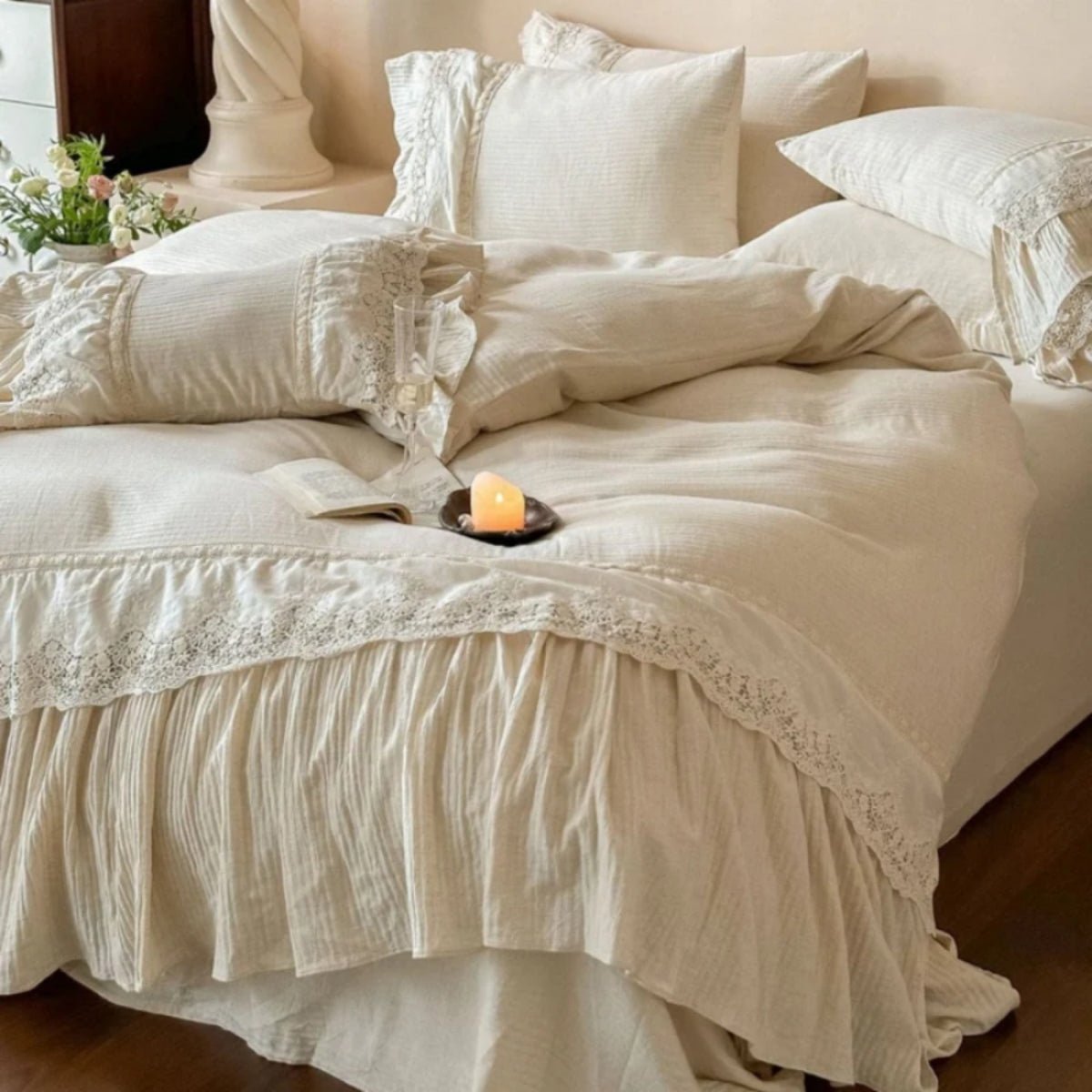
Our Maeve Floral Double Gauze Bedding Bundle features double-layered cotton gauze weave—a cooling bedding construction that maximizes airflow while the double-layer structure buffers temperature changes throughout the night. For hot sleepers, double gauze represents one of the most effective weave constructions available—the two layers create a microclimate where air circulates freely, allowing sweat to evaporate before it saturates the fabric. This means double gauze cooling bedding keeps you dry even during episodes of increased body heat.
Shop our Washed Cotton Collection for breathable weave cooling bedding options designed for warm sleepers.
Double gauze cooling bedding for maximum airflow:
Linen: Nature's Most Breathable Cooling Bedding Fiber


Linen deserves its own dedicated section in any cooling bedding guide because its temperature regulation properties go beyond simple moisture wicking. Linen fibers are hollow—meaning air circulates inside each individual fiber thread, creating natural ventilation at the microscopic level. This structure allows linen cooling bedding to actively move hot air away from your body and bring in cooler air, functioning more like a ventilation system than a simple moisture absorber. No other natural fiber matches linen's combination of breathability and temperature-regulating capability for effective cooling bedding.


Linen cooling bedding also has a unique thermal conductivity property—it feels cool to the touch even at room temperature, immediately drawing heat away from your skin when you first lie down. This initial cooling effect helps prevent the gradual heat buildup that leads to night sweats before they start. Linen absorbs up to 20% of its own weight in moisture without feeling wet, releasing it slowly through evaporation that creates a continuous cooling effect. It becomes more effective with each wash—softening while maintaining its hollow fiber structure that makes it excellent cooling bedding year after year.


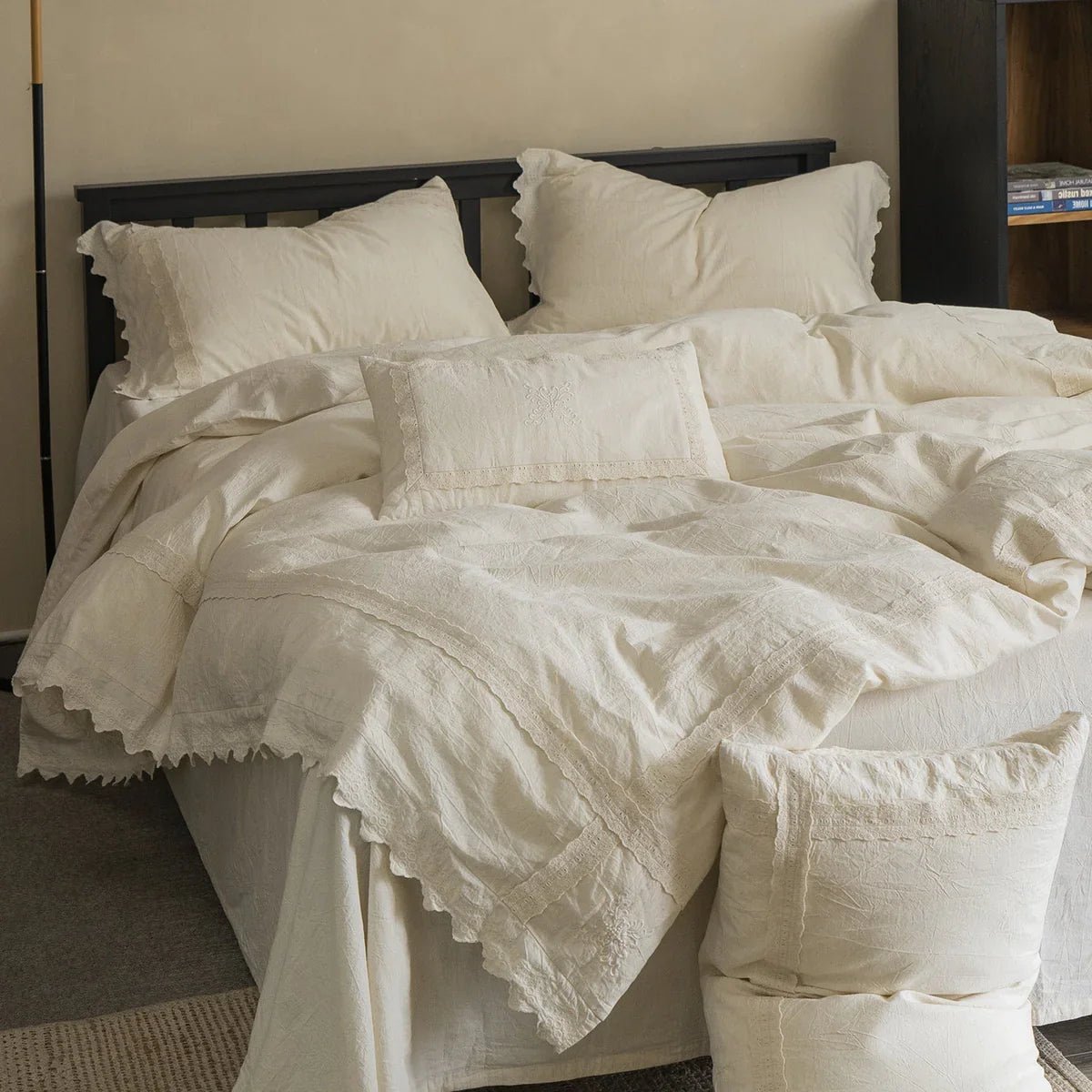
Our Amelie Lace Embroidered Linen Cotton Bedding Bundle blends linen with cotton for cooling bedding that delivers linen's breathability with cotton's familiar softness—perfect for hot sleepers who want natural temperature regulation without pure linen's initial crispness. The linen-cotton blend is an intelligent compromise for cooling bedding: pure linen delivers maximum breathability but feels stiff initially and wrinkles extensively. The blend retains most of linen's temperature regulation benefits while moderating these characteristics—an accessible entry point for those new to linen cooling bedding.
Browse our Natural Linen Collection for breathable cooling bedding that regulates temperature naturally.
Linen cooling bedding for natural temperature regulation:
Duvet Fill and Weight: The Overlooked Cooling Bedding Factor


Most people focus entirely on sheet fabric when building cooling bedding, completely overlooking the duvet insert—which often contributes more to night sweating than the sheets themselves. A heavy, dense fill traps body heat regardless of how breathable your duvet cover fabric is. The duvet sits directly over your body for most of the night, creating a sealed environment that either manages heat and moisture effectively or amplifies them. For genuine cooling bedding performance, duvet fill weight, fill material, and construction all matter as much as outer fabric choice.


Here's how to evaluate every duvet factor for effective cooling bedding:
✓ Fill Material — Plant-based eucalyptus or cotton batting breathes significantly better than down or synthetic polyester fills that compress into dense insulating layers. Plant-based fills are the foundation of cooling bedding inserts.
✓ Fill Weight — Summer weight (thin fill) is the critical choice for hot sleepers. Thinner inserts allow airflow through the cover fabric rather than creating a heat-sealing layer that defeats your cooling bedding system.
✓ Baffle Box Construction — Compartments prevent fill from shifting into corners, maintaining even distribution that eliminates hot spots and keeps cooling bedding performance consistent across the entire surface.
✓ Insert Casing Fabric — Natural unbleached cotton casing on the insert itself matters enormously. Synthetic casings trap moisture even when the fill breathes well, undermining your entire cooling bedding setup.
✓ Cover Pairing — The insert only performs as well as its cover allows. Pair any cooling bedding insert with double gauze or linen-cotton covers to maximize the airflow through both layers.
Our Plant Based Duvet Insert in Summer thickness is essential cooling bedding—plant-based fill with cotton casing that allows heat to escape rather than building up under your cover through the night. Paired with a breathable cooling bedding cover in TENCEL, linen, or double gauze cotton, a summer-weight plant-based insert creates a complete system where every layer works toward the same goal: keeping body temperature stable and moisture evaporating rather than accumulating.


Find complete cooling bedding systems in our Bedding Bundles Collection with breathable covers and summer-weight inserts.
Essential duvet options for a complete cooling bedding system:
Final Thoughts


Addressing night sweats requires thinking about cooling bedding as a complete system rather than individual products. Your sheets touch skin directly—choose TENCEL or linen for maximum moisture wicking. Your pillowcase covers the area where most body heat escapes—a TENCEL or cotton percale cooling bedding pillowcase makes a measurable difference. Your duvet cover forms the outer boundary of your sleep microclimate—double gauze or linen cotton provides optimal airflow. Your duvet insert determines the warmth ceiling of the entire system—summer-weight plant-based fill prevents heat buildup regardless of outer fabric quality. All four layers working together create cooling bedding that genuinely prevents night sweats.
When building your cooling bedding system, make changes in this priority order for maximum impact:
Step 1 → Replace synthetic sheets with natural fiber cooling bedding — This single change delivers the most immediate improvement for night sweats. TENCEL or linen sheets create instant, measurable temperature difference.
Step 2 → Switch to a summer-weight duvet insert — Heavy fill traps enormous amounts of heat. A plant-based summer weight insert removes the single biggest heat source in your cooling bedding system.
Step 3 → Replace your pillowcase with TENCEL or cotton percale — Head and face heat is a primary trigger for nighttime waking. A breathable cooling bedding pillowcase directly reduces this trigger.
Step 4 → Choose a double gauze or linen-cotton duvet cover — Your cover must allow the insert to breathe. A dense cover traps heat regardless of how breathable the insert fill is.
Step 5 → Add a mattress protector in cotton or TENCEL — The layer beneath you matters too. A breathable protector prevents heat buildup from below, completing your cooling bedding system on all sides.


Our Silky Solid TENCEL Bedding Bundle delivers a complete cooling bedding system—TENCEL sheets, duvet cover, and pillowcases that work together as a moisture-wicking, temperature-regulating sleep environment built for hot sleepers. Hot sleepers who switch to TENCEL or linen cooling bedding systems typically report fewer nighttime wakings and reduced sweating within the first week. Learn more about choosing the best fabrics for your sleep in our comprehensive guide to find the cooling bedding combination that works best for your specific sleep needs.


Summary
✓ Fiber type is the foundation: TENCEL wicks 50% more moisture than cotton, linen's hollow fibers actively ventilate, and cotton percale breathes cleanly—natural fibers form the non-negotiable base of any effective cooling bedding system.
✓ Weave controls airflow: Double gauze and percale weaves create open structures that release heat and allow air circulation—choosing the right weave multiplies the cooling effectiveness of even standard cotton fiber.
✓ Linen regulates temperature actively: Linen's hollow fiber structure creates natural ventilation at the microscopic level, absorbs up to 20% of its weight in moisture, and feels cool to the touch—making it nature's most complete cooling bedding fiber.
✓ Duvet fill matters as much as cover fabric: Summer-weight plant-based fills prevent heat accumulation at the most impactful layer—no amount of breathable cover fabric compensates for a heavy, heat-trapping insert underneath.
Looking for another read?


Holiday FAQs:
What is the extended holiday return and exchange policy?
Purchases made between November 10 and December 25, 2025 are eligible for return or exchange until January 10, 2026, if they meet standard return conditions:
- Unused and unwashed
- In original packaging
- Proof of purchase required
Gift orders: Leave a note at checkout to qualify for the extended window.
Note:
- Final-sale and non-returnable items remain excluded.
- Service add-ons (expedited shipping, gift wrapping, custom packaging) are non-refundable.
- Return shipping fees are paid by the customer unless the item is damaged or incorrect. We recommend a trackable shipping method.
What are the holiday shipping cutoff dates?
For US:
- Standard Shipping Deadline: December 12, 2025
- For Express Shipping Deadline: December 17, 2025
For International:
- Standard Shipping Deadline: November 30, 2025
- For Express Shipping Deadline: December 7, 2025
Shipping times may vary due to weather, customs, and carrier volume. Order early to ensure timely delivery.
Will holiday processing times be longer?
Yes — due to peak volume:
- Processing: 2–4 business days (normally 1–2)
- Delivery times vary by region and carrier capacity
We’ll continue to share live updates on expected fulfillment timelines on our website banner and FAQ page.
Holiday Support Hours:
- Limited hours: Dec 24–26 and Jan 1–2
- Orders placed during these dates will process when normal operations resume
Do you offer price adjustments on holiday or post-holiday sales?
No — price adjustments cannot be applied to items purchased before or after sale periods.
To catch future deals, subscribe to our newsletter.
Anything we missed?
Thanks for reading till the end — we hope it brought a little calm and inspiration to your day.
Discover more: Inspiration Blog • New Arrivals •
Stay tuned for our next story, or share this one to spread the calm.
• Share your makeover moments with #EverLastingMakeover and tag @EverLastingFabric
Connect with us:
ethical decor ethical decor ethical decor ethical decor