How to Layer Bedding for That Summer-to-Fall Transition


Summer bedding is built for one job: staying cool. Fall bedding has a different one — building warmth in layers you can add or peel back as the temperature keeps changing its mind. Here's how to build your bed in layers, texture, weight, and warmth, so it adjusts to the season instead of you adjusting to it.
Shop the layer must-haves
→ Cotton Quilt with Lace Trim/Red & Brown
→ Helena Jacquard Throw Blanket (7 Shades)
→ Assorted Latte Breathable Blanket
→ Caleb Fleece Throw Blanket / Khaki
Before we get into how to build the stack layer by layer, we recommend reading on where the palette side of the transition is headed this year: Warm Neutrals and Layered Textures: Styling Your Bedroom for Fall, for a good primer on color before you start layering texture on top.
Table of contents
The Layering Effect


Nobody wants to fully strip a bed and start over just because the calendar flipped to September. But that's exactly what a lot of people do: out with the light duvet, in with a heavy comforter, and then they're sweating through the first warm week of fall wondering why the bed suddenly feels like too much.
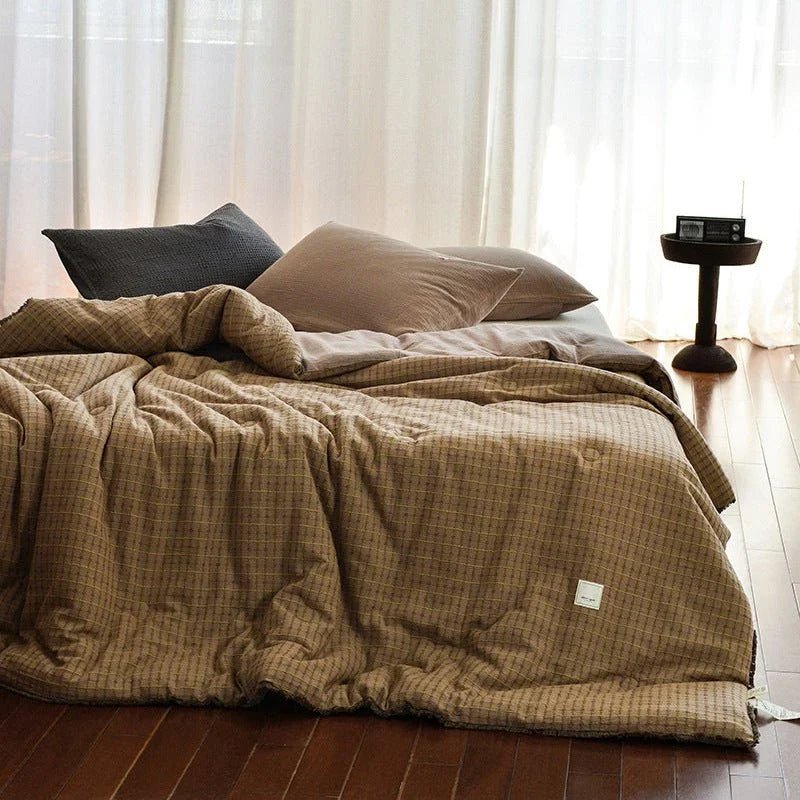
Here's the thing: the summer-to-fall switch was never supposed to be a single swap. It's supposed to be a stack. The same way you'd layer a t-shirt, a flannel, and a jacket instead of just grabbing one heavy coat in September, your bed does better with pieces you can add or peel back than with one comforter that has to be right for every night from now until December. A piece like the Vintage Plaid Bedding Set / Red & Green is a good example of a mid-weight foundation that can carry the whole stack from early fall into winter without needing to be replaced.
Grab your favorite throw, here's how to build the stack.
How to go about the resetting?
Why Layering Feels Like a Seasonal Reset?


A bed that's actually layered — sheet, quilt, throw, pillows — doesn't just look more finished, it functions better. Each piece is doing a different job. The sheets regulate temperature against your skin. The quilt or coverlet adds weight without trapping heat. The throw adds the texture and warmth you actually see and feel first. The pillows are what tie the whole look together.
That's why layering bedding for fall feels less like decorating and more like resetting the room for the season. It's the same instinct behind swapping your wardrobe drawers around — not just changing how things look, but changing how the whole space feels to be in. A set like the Silky Ruffle Blanket Comforter Set / White shows how a single well-chosen piece can anchor that reset without requiring you to touch anything else on the bed yet.
You don't need to replace your sheets, your duvet insert, or your bed frame to make your room feel like fall. What you need is two or three new layers that stack on top of what you already have. Here's where to start, and what to add at each stage.
How to go about the resetting?
Base Layer: Keep the Sheets Breathable


The sheets touching your skin all night are doing the most temperature regulation of any layer on the bed, which is exactly why they shouldn't be the first thing you swap. Cotton percale and linen sheets, like the Esme French Linen Cotton Embroidered Floral Bedding Set / White, stay breathable well into fall, so there's rarely a reason to reach for flannel this early. Save that for when nights are consistently cold; everything else in the stack is what's going to carry the seasonal shift.
- Keep your existing sheets in play; breathable fabrics work double duty across summer and early fall.
- Linen gets softer and more textural with every wash, which is exactly the tactile quality fall bedding wants.
- It's the layer that lets everything on top of it do the seasonal work, instead of overheating you from underneath.
Natural Linen for the base layer bedding
Mid Layer: Add Weight Before Warmth


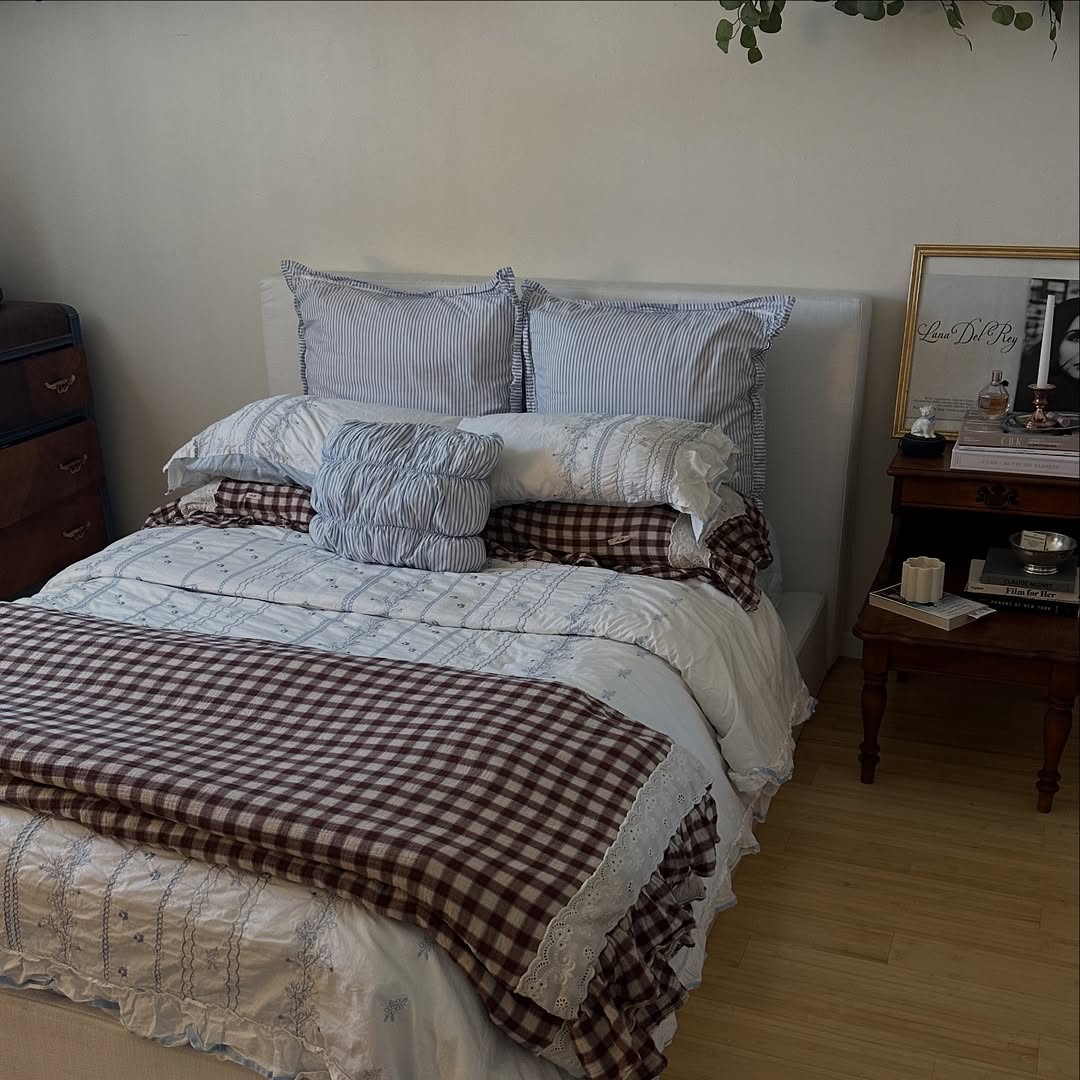
This is the bedding layer most people skip straight past, going from a light duvet in August to a heavy comforter in October with nothing in between. A quilted cotton coverlet like the Cotton Quilt with Lace Trim / Red & Brown, layered over your existing duvet insert, adds real weight and a sense of coziness without trapping the heat a heavier fill does. It's also the easiest piece to fold down on a warm night and pull back up on a cold one, which is the entire point of building layered bedding in stages instead of committing to one fill weight for the whole season.
- Shop a quilted coverlet if your bed still has its summer duvet insert underneath; weight comes first, warmth comes later.
- This layer is what turns a flat, single-tone bed into something with visible depth and texture from across the room.
- It's the piece you will actually adjust night to night, which makes it the most useful layer in the whole stack.
Cotton Quilts & Coverlets for the mid layer
Texture Layer: Waffle & Knit Do the Work


Summer bedding tends to lean smooth — cotton sateen, crisp percale, cool-to-the-touch fabrics built to disappear into the background. Fall is the season texture gets to lead instead. A waffle-knit throw like the Breathable Pastel Knitted Blanket or a chunky knit blanket changes how the whole bed reads before the temperature even drops, and none of it requires touching the sheets or duvet underneath. Texture is the fastest way to make a room feel like it's shifted seasons without repainting a single wall.
- A ribbed or waffle knitted throw over a smooth duvet is the easiest texture contrast in the whole stack.
- Mixing a matte, nubby fabric against your existing smooth sheet creates depth that a single new color never will.
- It's the layer that makes the bed feel intentional rather than simply colder.
Waffle & Knit Throws for the texture layer
Statement Layer: One Throw Beats Five


It's tempting to pile on a handful of small decorative throws and call the bed layered, but too many competing textiles reads cluttered, not cozy. One substantial throw — like the Helena Jacquard Throw Blanket, folded or draped at the foot of the bed in a deeper autumnal tone — does more visual work than three thin ones stacked together. It's also the single easiest piece to strip off entirely on a warm night, which is the whole reason to build layered bedding in stages instead of committing to one heavy blanket you're stuck with either way.
- Shop one oversized knit or jacquard throw instead of several small ones; editing down is what makes a layered bed look designed.
- A deeper rust, olive, or cocoa tone against a neutral base is the fastest way to signal the season shift.
- It's the piece guests notice first, and the ones you'll reach for on every cold morning.
Statement Throws for the foot of the bed
Finishing Layer: Let the Pillows Transition Too


Pillows are the lowest-effort, lowest-cost way to shift a room's season, and they don't require touching a single other layer on the bed. Swap a couple of smooth cotton shams for a textured lumbar pillow, or a deeper accent color from the Pillow & Pillowcase Collection, and leave the sheets, quilt, and throw exactly as they are. Because pillows are easy to add or remove one at a time, they're also the safest place to test a new color story before committing to it anywhere bigger on the bed.
- Shop one or two textured accent pillows if you are not ready to commit to a new throw or quilt yet.
- Mixing a smooth sham with a knit or velvet lumbar pillow is the cheapest texture contrast in the entire stack.
- This is the layer that lets you test the whole fall palette before you build the rest of the bed around it.
Summary
Switching your bedding for fall was never really about replacing everything at once, it's about resetting the bed you spend a third of your life in.
Layering it properly makes that reset feel less like a chore and more like a ritual, one you can adjust night to night as the season keeps changing its mind.
Start with the base you already have, add weight before warmth, bring in texture, and let one good throw and a couple of pillows finish the job.
Looking for another Read?


FAQ:
How many layers does a fall bed actually need?
Three does the job for most rooms: a breathable base sheet, a mid-weight quilt or coverlet, and one substantial throw. Pillows are the optional fourth layer if you want to keep refining the look.
Do I need to buy a new duvet insert for fall
Not necessarily. Layering a quilt or coverlet over your existing summer insert usually adds enough warmth for early fall. Save the heavier insert swap for when nights are consistently cold.
Do you offer student discounts?
Absolutely! We understand education is expensive, and are pleased to offer 10% off to those in school pursuing higher education. Simply send us an email to verify your student status and receive your discount code. :)
Anything we missed?
Find more answers and tips, be it the room aesthetic or the music choice that would best go with it, reach out to us on our back to school page or contact us for more help :)
Thanks for reading till the end — we hope it brought a little calm and inspiration to your day.
Discover more: Inspiration Blog · New Arrivals ·
Stay tuned for our next story, or share this one to spread the calm.
♡ Share your makeover moments with #EverLastingMakeover and tag @EverLastingFabric
Connect with us:
Instagram | Facebook | TikTok | Pinterest | YouTube