Why Soft, Neutral Bedrooms Help You Unwind Faster

A bedroom should feel like a place where the day loosens its grip. Yet for many of us, it has become another space filled with visual noise. Bold colours, sharp contrasts, and competing patterns keep the mind alert long after the day has ended. A neutral bedroom offers a different experience. It is not about minimalism for the sake of style, but about creating an environment that helps the body and mind slow down naturally.


A neutral bedroom works because it reduces the number of signals your nervous system has to process at night. Soft tones, gentle layering, and familiar textures create visual calm, allowing the mind to unwind faster. Instead of demanding attention, a neutral bedroom supports rest by staying consistent and grounded. Over time, this kind of space becomes a cue for relaxation, making a neutral bedroom one of the simplest ways to transition out of the day and into rest.
Take a look at Emily's Bedroom, which shows how softness and ambition can exist in a shared space.
Table of Contents
1. How a Neutral Bedroom Signals the Body to Slow Down


The brain is always responding to its surroundings. When a space is visually busy, the body stays alert even at night. A neutral bedroom lowers that stimulation. With fewer contrasts and softer tones, a neutral bedroom helps the nervous system recognise that it is time to slow down and rest.
Why a neutral bedroom supports faster unwinding
Fewer contrasts reduce visual processing
Soft neutrals feel calmer than saturated colours
Consistency helps the body relax


Over time, these signals become familiar. A neutral bedroom starts to feel predictable and grounding. Instead of demanding attention, a this bedroom supports rest by gently guiding the body out of the day.
Create your bedtime system to slow down, starting with our Luminae Pajama Set and Helena Jacquard Throw Blanket.
Shop our bedding bundles that make your neutral bedroom easy to achieve!
2. Why Soft Neutrals Create Visual Quiet


Visual quiet comes from harmony, not emptiness. In a neutral bedroom, tones sit close together, allowing the eye to move slowly and naturally. This is why a neutral bedroom often feels calming the moment you enter, especially in the evening.


How a bedroom reduces visual noise
Muted tones blend rather than compete
Gentle contrasts feel grounding
Soft finishes calm the space at night
A neutral bedroom does not ask you to engage or analyse. It simply holds the space. When the room feels visually quiet, the mind follows, which is why a neutral bedroom makes it easier to unwind before sleep.
Complete the look for better rest, with Esme Cotton Pajama Set and Annalise Claystone Throw Blanket.
Explore the neutral bedding sets, that set the perfect tone for your bedroom
3. How a Neutral Bedroom Reduces Mental Load


A busy space keeps the mind working, even when the body is tired. A neutral bedroom simplifies what the eye sees, which helps reduce mental load at the end of the day. By limiting visual noise, a neutral bedroom creates a sense of order that feels calming rather than stimulating.
Now that you have an idea of what your bedroom should feel like, start with our Elliot Cotton Bedding Set as your foundation.


Why a neutral bedroom feels easier to live with
Fewer colours reduce visual decisions
Cohesive tones create a settled feeling
Pieces layer easily without clashing
The space feels consistent from day to night
Because it stays visually steady, a neutral bedroom removes the pressure to constantly adjust or restyle. That consistency helps the mind slow down, allowing a neutral bedroom to support rest more naturally.
Try our blankets that add a layer of comfort and peace to help you regulate.
4. Using a Neutral Bedroom as Part of Your Nighttime Routine


Rest becomes easier when the environment supports routine. A neutral bedroom works best when all elements contribute to the same calming signal. Bedding, layers, and textures play a quiet but important role in reinforcing rest.
How a bedroom supports better evenings
Repetition strengthens wind-down cues
Soft layers work together instead of competing
Familiar textures feel grounding
Consistent styling reduces stimulation


Over time, a neutral bedroom becomes associated with slowing down. The body learns what to expect when you enter the space, which is why a neutral bedroom can make unwinding feel more natural. Explore our cozy essentials on sale.
Build your night time ritual to reset after a busy day with our pajamas.
5. How to Ease Into a Neutral Bedroom Without Starting Over


Creating a calming space does not require a full reset. A neutral bedroom can be built gradually, starting with a few intentional changes. Small shifts in colour and texture are often enough to change how the space feels at night. A neutral bedroom is less about perfection and more about consistency.
Shop the Bed as a System without starting all over again with our Spring Collection.


Simple ways to build a neutral bedroom
Start with pillowcases in soft, muted tones
Add one grounding layer like a neutral blanket
Choose sleepwear that mirrors the bedroom palette
Let repetition guide future additions
When changes are made slowly, a neutral bedroom feels natural rather than forced. Over time, these small choices add up, allowing a neutral bedroom to support rest without overwhelming the space.
If you feel like neutrals are great but would love to add a layer of classic comfort, see our guide on stripes help you unwind and reset.
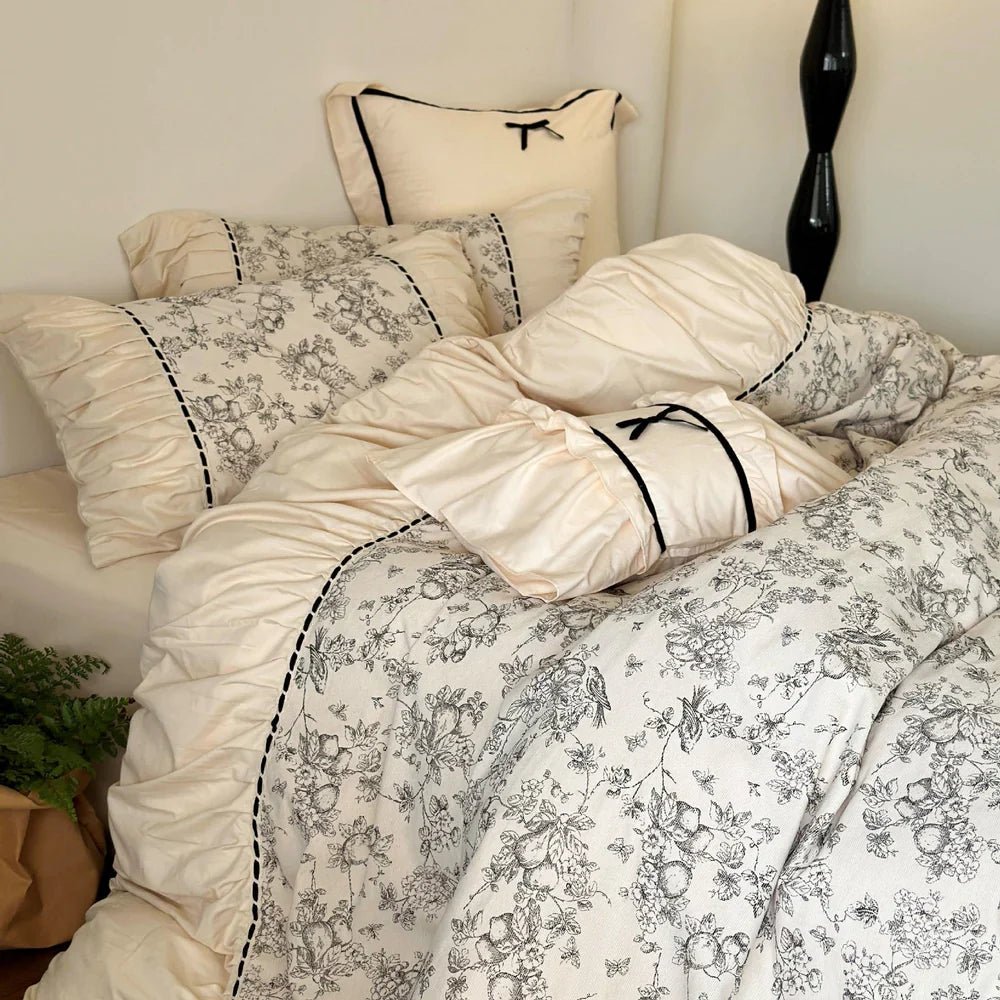
Neutral doesn't have to plain, try incorporating stripes, pattern, and ruffles in your bedding.
Final Thoughts
A neutral bedroom is not about following a look or creating a perfect space. It is about shaping an environment that supports rest without asking for effort. Soft tones, familiar textures, and visual consistency help the body slow down naturally at the end of the day. Over time, a neutral bedroom becomes a place that feels steady and easy to return to, night after night.


When the bedroom asks less of you, rest comes more easily. A neutral bedroom creates room for routine, quiet, and recovery, allowing sleep to feel less forced and more intuitive. By choosing pieces that work together and feel familiar, a neutral bedroom can become one of the simplest ways to unwind faster and rest better.
Explore our New Arrivals and discover pieces designed to support everyday comfort.
A neutral bedroom helps the body unwind faster by reducing visual noise and overstimulation at the end of the day.
Soft, muted tones create visual calm, allowing the nervous system to shift more easily into rest mode.
Layered textures add comfort without distraction, making the space feel grounding rather than flat.
Visual consistency in a neutral bedroom reduces mental load and decision fatigue at night.
Treating the neutral bedroom as a system, including bedding, layers, and sleepwear, strengthens nighttime routines.
Small, intentional changes make it easy to transition into a neutral bedroom without starting over.
Read More Here:


FAQs
What type of bedding fabrics are best for the winter and holiday season?
Flannel, brushed cotton, and linen blends are ideal — they’re cozy, breathable, and keep warmth without overheating.
How do I layer bedding for colder nights?
Start with soft cotton sheets, add a mid-weight duvet, and top with a textured throw or blanket. Mixing materials adds both warmth and visual depth.
What makes a bedding set a good gift for the holidays?
Look for high-quality fabrics, timeless colors, and soft textures. Gift sets that come in elegant packaging or with coordinating pieces feel more thoughtful.
How should I store my holiday bedding after the season ends?
Fold and store in breathable cotton bags, avoid plastic containers, and keep in a cool, dry place to preserve color and fabric quality.
Anything we missed?
Thanks for reading till the end — we hope it brought a little calm and inspiration to your day.
Discover more: Inspiration Blog · New Arrivals ·
Stay tuned for our next story, or share this one to spread the calm.
♡ Share your makeover moments with #EverLastingMakeover and tag @EverLastingFabric
Connect with us:
Instagram | Facebook | TikTok | Pinterest | YouTube