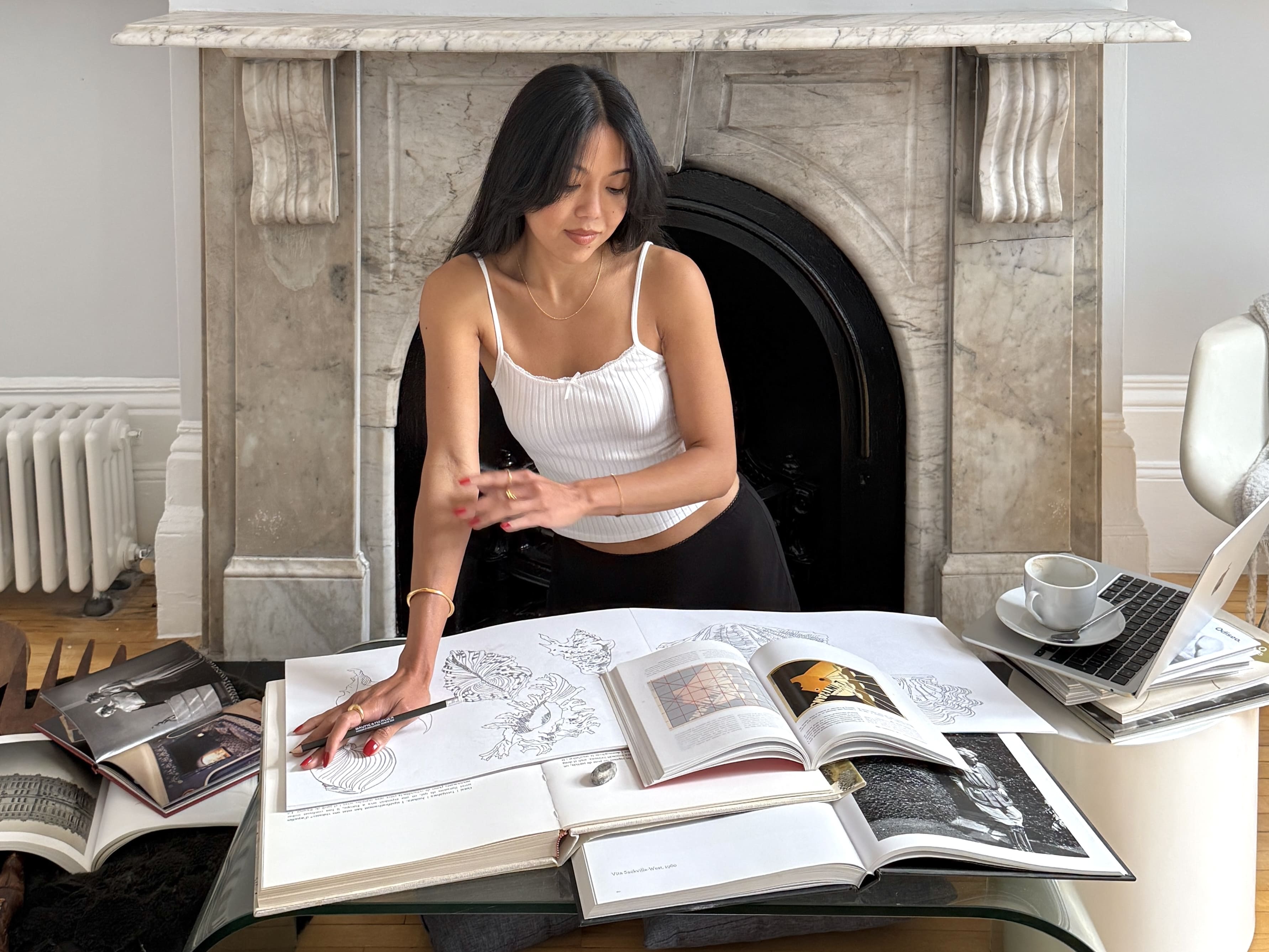
Stories In The Bedroom: Inside Lee Mei's Yoga Teacher's Space
Rest isn't just sleep. It's finding your way back to yourself


Table of content
We Talked to Lee, Who Turned Her Bedroom Into a Practice — and It Changed How We Think About Rest
Can a room actually change how you feel? Not in a vague, aesthetic Pinterest-board kind of way, but genuinely and physically, down to how your nervous system responds the moment you walk through the door? Lee Mei, a yoga teacher based in Berlin, would tell you yes without hesitation. And after spending time in this conversation with her, learning about the salt lamps and the linen and the incense gifted by friends and the Ganesha statue from India sitting quietly on her shelf, we are fully convinced. Lee does not just teach people how to breathe and move. She builds spaces that breathe with her. This is that story.


The One Room Where She Gets to Stop
Ask Lee what her bedroom means to her and the answer comes quickly, clearly, and with the kind of certainty that only comes from someone who has thought about this deeply.
"My room is the place where I can simply relax. I can stop being a teacher, stop being a friend, and simply just be."
That sentence is doing a lot. Because for most of us, rest is something we try to fit in around everything else. We collapse into bed still carrying the mental weight of the day, still half in our roles, still half somewhere else. Lee has built a room that actively asks all of that to wait outside.
As a yoga teacher, she holds space for others constantly. She is guiding, observing, adjusting, offering. The bedroom is where none of that is required. It is the one place where the performance of everyday life gets to stop, and where she gets to just be a person, in a body, breathing.
That might sound simple. It is actually radical.

How She Designed a Room Around Her Nervous System
Here is where it gets genuinely fascinating. Lee does not style her room the way most people style a room. She does not start with a color palette or a mood board. She starts with a question: how do I want to feel in here?
Everything follows from that.
"So anything that's brown or green or beige or this orange, reminds me a bit of sunsets. It helps my nervous system simply go into a state where I feel that I can surrender and relax."


Bright overhead lights go off hours before bed. Salt lamps and candles take over, casting the kind of warm, low light that signals to the body that the day is winding down. She chooses earthy colors, natural materials, linen, wood, plants, things that feel connected to the ground. She burns incense to shift her mood and focus the way some people use music or meditation.
None of this is accidental. As someone who teaches breathwork, Lee understands on a practical, embodied level that the environment around us is not just backdrop. It is input. What we see, smell, touch, and sense is all information that the nervous system is constantly processing, and all of it either moves us toward stimulation or toward rest.
She chooses rest, deliberately, one sensory detail at a time.


The Rituals That Begin Before She Even Gets Into Bed
One of the most quietly powerful things Lee talks about is the idea that sleep does not just happen when you lie down. It starts long before that.
Her evenings are built around transitions. A hot shower. Adjusted lighting. Breathwork. Reading. Incense. Not as a rigid checklist, but as a gradual movement from the active world into stillness. Each ritual is a small signal to her body: it is safe to slow down now. You do not have to be ready for anything. You can let go.


"So although you do your yoga practice by yourself, it is the collective energy that helps you carry on with your practice towards the end"
This is something yoga philosophy has known for a long time and that modern sleep science is now catching up to. The body needs a bridge between activity and rest. It cannot simply switch off. And when you build that bridge intentionally, night after night, the body learns to trust it.
Lee's favorite bedding, Evelyn Retro Double Gauze Bedding Set, is a part of that ritual too. She says it reminds her of the clothing she wears while traveling in India: loose, breathable, soft against the skin. It carries a feeling of comfort and freedom, which is exactly what she is reaching for when the day is done.


A Room Where Different Cultures Meet
Walk into Lee's bedroom and you are walking into a kind of personal archive. There are objects from India, Japan, Sweden, Cuba. A tatami yoga mat. A Ganesha statue. Books stacked beside the bed. Artwork made by people she loves. Incense gifted by friends.
None of it was curated for appearance. Every single object carries a story.
"Everything has a meaning. Everything has a little bit of intention."
This is something she returns to again and again throughout our conversation. The significance is never in the thing itself. It is in what the thing holds. A memory. A relationship. A moment from a trip that changed how she saw something. The objects in Lee's room are less decoration and more a physical map of where she has been and who she has loved.
She describes the room as "some sort of extension of myself," and standing inside it, you would believe that immediately. It is a space that could not belong to anyone else. It is entirely, specifically, warmly hers.


What Ancient Wisdom Has to Do With Where You Sleep
This might be the part of the conversation that surprised us most. Lee draws deeply from Hindu philosophy, yoga traditions, and stories from the Ramayana, not as religious practice but as a living framework for how to move through the world.
Devotion. Discipline. Duty. Community. Consistent practice. These are not abstract ideals for her. They show up in how she teaches, in how she structures her days, and in how she has built the space she comes home to.
There is something grounding about anchoring your daily life to stories that have existed for thousands of years. Stories that were never about perfection but about showing up, again and again, with intention and care.


Lee's bedroom reflects that philosophy more than any interior design trend ever could. It is not aspirational. It is not staged. It is lived in, layered with meaning, and built around the belief that how you rest is just as much a practice as how you move.
"The more I learn about myself," she says, "the more I realize the things that make me feel present."
We left this conversation wanting to go home, light something, lower the lights, and lie down in something made of linen. Which feels like exactly the right response.


Summary
Lee's bedroom is designed around one core idea: it is the only place where she can stop performing every role she plays in the world and simply exist, which is something she considers just as important as any yoga practice.
From salt lamps and linen sheets to Ganesha statues from India and a tatami mat from Japan, every object in Lee's room carries a story, and that intentionality is what transforms a space from a room into a ritual.
Lee's approach to sleep starts hours before she gets into bed, with adjusted lighting, breathwork, hot showers, and incense that gradually guide her nervous system from stimulation into stillness.
Frequently Asked Questions
How does Lee the yoga teacher design her bedroom for better sleep?
Lee approaches her bedroom the way she approaches her yoga practice: with intention. She dims lights hours before bed, uses salt lamps and candles instead of overhead lighting, burns incense to shift her mood, and incorporates natural materials like, Evelyn Retro Double Gauze Bedding Set, wood, and plants throughout the space. Together these choices actively signal to her nervous system that it is time to slow down.
What is the connection between environment and nervous system regulation?
As someone who teaches breathwork and body awareness, Lee understands firsthand that the spaces around us directly affect how we feel inside them. Colors, textures, lighting, and scent are not decorative choices but sensory ones. When those elements are chosen deliberately, they can help move the body from a state of stimulation and alertness into genuine rest and recovery.
How can designers or artists be featured by Ever Lasting?
We welcome designers, makers, and creative thinkers whose work reflects emotional depth, slow craft, and a meaningful connection to material and place. Our EverInspired features spotlight individuals who create with intention — those who see design as a form of care and who shape objects that bring calm, beauty, and presence into the home.
If your practice aligns with these values and you feel your story belongs in this series, we’d love to hear from you. You can reach our editorial team at: collabs.everlastingfabrics@gmail.com
Related readings


Elevate your Bedroom
Ready to bring a sense of quiet beauty into your home? Explore Ever Lasting’s collection of thoughtfully crafted bedding essentials.
Soft textures. Calm tones. Designed for the way you truly live.