Fabric Guide: Understanding Cotton, Linen & Velvet

When Comfort Is Treated as Visual
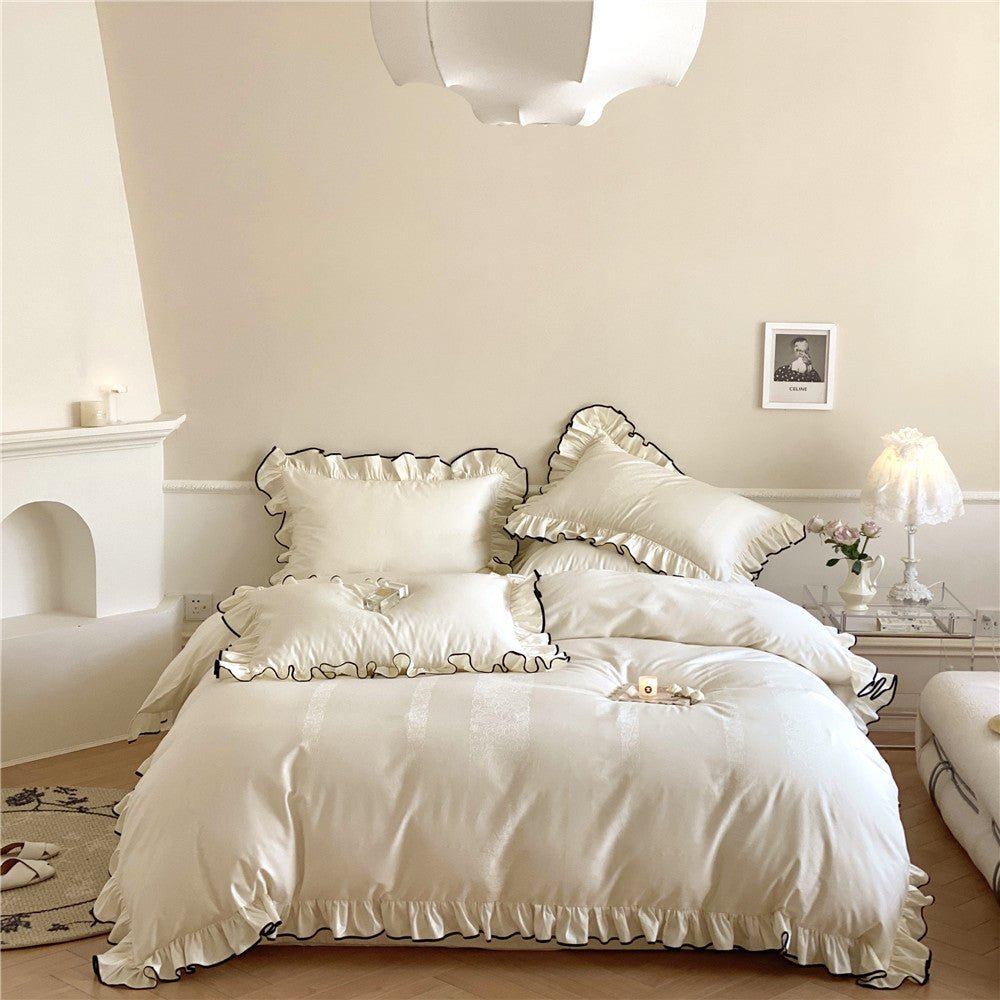
Comfort is most often judged at a distance. We assess a bedroom the way we would a photograph: by balance, color, and composition. A well-styled bed signals calm before the body ever touches it. We assume that what looks comfortable will feel the same.
But the body does not experience comfort visually. It experiences it through contact. Long before the mind registers softness or luxury, the skin is already responding. Texture, airflow, temperature, and friction begin communicating immediately, shaping whether the nervous system prepares for rest or remains subtly alert.
Fabric is the first point of contact between the body and sleep. It determines how easily muscles release, how freely heat escapes, and how much effort the body must expend to stay comfortable. These signals operate below conscious awareness. By the time we notice discomfort, the body has already been working to correct it.
This is why visual calm does not always translate into physical ease. A bed can look serene while still asking the body to adjust, resist, or endure. True comfort is not something the body admires. It is something the body no longer has to think about.
When fabric is chosen primarily for appearance, it often prioritizes structure, smoothness, or visual uniformity over breathability and movement. The result is an environment that looks restful but feels subtly demanding. Rest becomes something the body attempts rather than something it naturally enters. This fabric guide will help you learn about fabrics like linen, cotton and velvet.
Want to know how fabric can change the way you rest and recover? We break it down in this blog here
Table of contents
Fabric Guide: A Regulator, Not a Decoration


Fabric is rarely treated as a functional system. It is often added last, chosen to complete a look rather than support a physiological process. Yet from the body’s perspective, fabric is not passive. It continuously regulates heat, pressure, and movement throughout the night.
Every interaction between skin and fabric sends information to the brain. When material clings, traps warmth, or resists motion, the nervous system compensates by staying engaged. Muscles remain slightly active. Breathing patterns stay lighter. Sleep becomes more fragile, even when the body appears still.
Over time, this low-grade effort accumulates. The body may spend hours in bed without fully recovering, mistaking immobility for rest. Disruptions are not always dramatic. Often they appear as subtle restlessness, frequent repositioning, or waking without a clear sense of why recovery feels incomplete.


Supportive fabric behaves differently. It adapts to the body rather than asking the body to adapt to it. Breathable materials allow heat and moisture to escape. Flexible weaves permit micro-movements without resistance. Weight, when present, is distributed rather than concentrated.
In this way, fabric functions as a regulator. It reduces the number of decisions the body must make during rest. When fabric works with the body’s natural rhythms, the nervous system receives a consistent message: it is safe to release. Comfort is no longer something to achieve. It becomes the baseline.
Fabric Guide: Discover more favorites...
Fabric Guide: Natural Linen


The first stop of the fabric guide is linen. Linen communicates ease through absence. It does not cling, trap, or resist. Instead, it creates space between the body and its surroundings, allowing the nervous system to settle without negotiation.
Linen is made from the fibers of the flax plant, which requires minimal water and processing compared to most textiles. The fiber’s natural structure is preserved through weaving rather than heavy finishing, allowing the material to remain breathable and responsive.
One of linen’s most important qualities is airflow. Its natural fiber structure encourages continuous circulation, preventing heat and moisture from accumulating at the skin. This reduces the need for nighttime adjustments, allowing the body to remain still for longer periods without discomfort.
- Linen’s texture also plays a subtle regulatory role. The fabric’s gentle irregularity prevents overstimulation while providing consistent sensory input. This balance helps the body feel grounded without becoming aware of the material itself. There is no slickness, no suction, no tension, only contact that feels permissive rather than directive.

Over time, linen softens in response to use. Unlike fabrics that degrade or lose integrity, linen becomes more responsive as it ages. Each wash reduces stiffness while preserving breathability, reinforcing a predictable sensory experience night after night. This consistency allows the nervous system to trust the environment more quickly, deepening rest through familiarity.
Durable and naturally derived, linen supports both the body and the larger system it belongs to. Its longevity matters not only structurally but biologically. Fabrics that endure reduce sensory variability, and variability is often what keeps the body alert. If you want to get the benefits of linen without sacrificing aesthetics, then the Amelie Lace Embroidered Linen Cotton Bedding Set is a great option.
Discover more fresh linen for your room
Fabric Guide: Types of Cotton


The next stop in the fabric guide is cotton. Cotton supports rest through recognition. Its feel is widely familiar, which lowers sensory novelty and allows the body to relax without needing to interpret new input. When the nervous system encounters a known texture, it expends less energy evaluating it.
Cotton is produced from the soft fibers surrounding the cotton plant’s seeds, spun into yarn, and woven or knit depending on the desired behavior. Its versatility comes from how it is finished; washed for softness or knit for stretch, rather than from synthetic alteration.
Washed cotton offers immediate softness. The fabric arrives already relaxed, removing the need for break-in time. This lived-in quality reduces friction at contact points and helps muscles release more quickly upon lying down. The body does not brace against the surface; it yields to it.
- Jersey knit cotton introduces flexibility as an additional layer of support. Its gentle stretch accommodates small, unconscious movements without pulling or resistance. This matters more than it seems. When fabric moves with the body, micro-adjustments do not trigger arousal. The nervous system remains undisturbed, even as posture shifts throughout the night.

Both forms of cotton remain breathable, allowing heat to dissipate and moisture to escape. Their dependability makes them well suited for daily use, where consistency is more valuable than intensity. Cotton does not attempt to elevate the experience. It stabilizes it.
In this way, cotton becomes a baseline fabric. It establishes a reliable sensory environment, giving the body fewer reasons to stay alert and more permission to rest. Introducing the Cozy Washed Cotton Striped Duvet Cover into your sanctuary is a great first step in elevating your sleep experience.
Find more of Ever Lastings cotton fabrics here...
Fabric Guide: Smooth Velvet


The last stop in this fabric guide is velvet. For some bodies, rest arrives more easily through warmth and gentle pressure. Velvet provides both. Its density adds insulation, while its surface creates a soft resistance that slows movement rather than restricting it.
Velvet is defined by its construction rather than its fiber, created through a weaving process that forms a dense, raised pile. This method gives the fabric its characteristic weight and depth, allowing it to insulate while remaining soft to the touch.
Weight, when applied evenly, can calm the nervous system by increasing bodily awareness. Velvet’s structure distributes this weight without compression, offering a sense of grounding that feels supportive rather than confining. The body feels held, not trapped.
- Velvet is particularly effective during colder months, when temperature drops can cause subtle tension and nighttime waking. By maintaining warmth at the surface, the fabric reduces the body’s need to self-regulate through muscle engagement or repositioning. The result is deeper stillness with less effort.

Its tactile richness also contributes to psychological comfort. Velvet absorbs light and sound visually, reinforcing a sense of enclosure and calm. This environmental consistency helps signal that the body is in a protected, low-demand space.
Used intentionally, velvet does not overwhelm the sleep environment. It anchors it. As a seasonal or layered fabric, it adds depth and reassurance, supporting rest through presence rather than stimulation. Ever Lasting's Marigold Velvet Pleated Lace Bedding Set is a great way to introduce rest and reassurance into your bedroom environment.
Discover elegant velvet fabrics here...
Fabric Guide Final Thoughts: Fabric Is the First Signal

Rest is not something the body can be instructed to do. It emerges when the environment removes resistance. Fabric plays a quiet but decisive role in this process. Long before sleep deepens, the skin is already gathering information about safety, temperature, and ease of movement.
When materials breathe, drape, and respond rather than constrain, the nervous system receives a clear message: it is safe to let go. Muscles soften more easily. Breathing slows without effort. Sleep becomes less fragile because it no longer depends on constant adjustment.
The main takeaway for this fabric guide is that: fabric is more than a decoration; it's a language.
Explore our Shop by Fabric Collection, designed with sustainable options to support the body’s natural transitions through breathable materials, calming textures, and rest-first construction.


Fabric Guide: Summary
The fabric you choose influences the way you rest, not just on a mental level but also on a biological one.
Knowing the benefits of each fabric can help your body relax in ways that you may not be aware of
Repeated exposure to the right fabrics can help our bodies regulate and learn automatic relaxation processes.
More Fabric Guides:


FAQs
What type of bedding fabrics are best for the winter and holiday season?
Flannel, brushed cotton, and linen blends are ideal — they’re cozy, breathable, and keep warmth without overheating.
How do I layer bedding for colder nights?
Start with soft cotton sheets, add a mid-weight duvet, and top with a textured throw or blanket. Mixing materials adds both warmth and visual depth.
What makes a bedding set a good gift for the holidays?
Look for high-quality fabrics, timeless colors, and soft textures. Gift sets that come in elegant packaging or with coordinating pieces feel more thoughtful.
How can I style holiday bedding without it looking too over-the-top?
Choose subtle festive tones (warm neutrals, deep reds, forest greens) and pair them with solid or textured layers instead of bold prints.
Anything we missed?
Thanks for reading till the end — we hope it brought a little calm and inspiration to your day.
Discover more: Inspiration Blog • New Arrivals •
Stay tuned for our next story, or share this one to spread the calm.
• Share your makeover moments with #EverLastingMakeover and tag @EverLastingFabric
Connect with us:
modern man modern man modern man modern man modern man modern man modern man modern man modern man modern man modern man modern man