

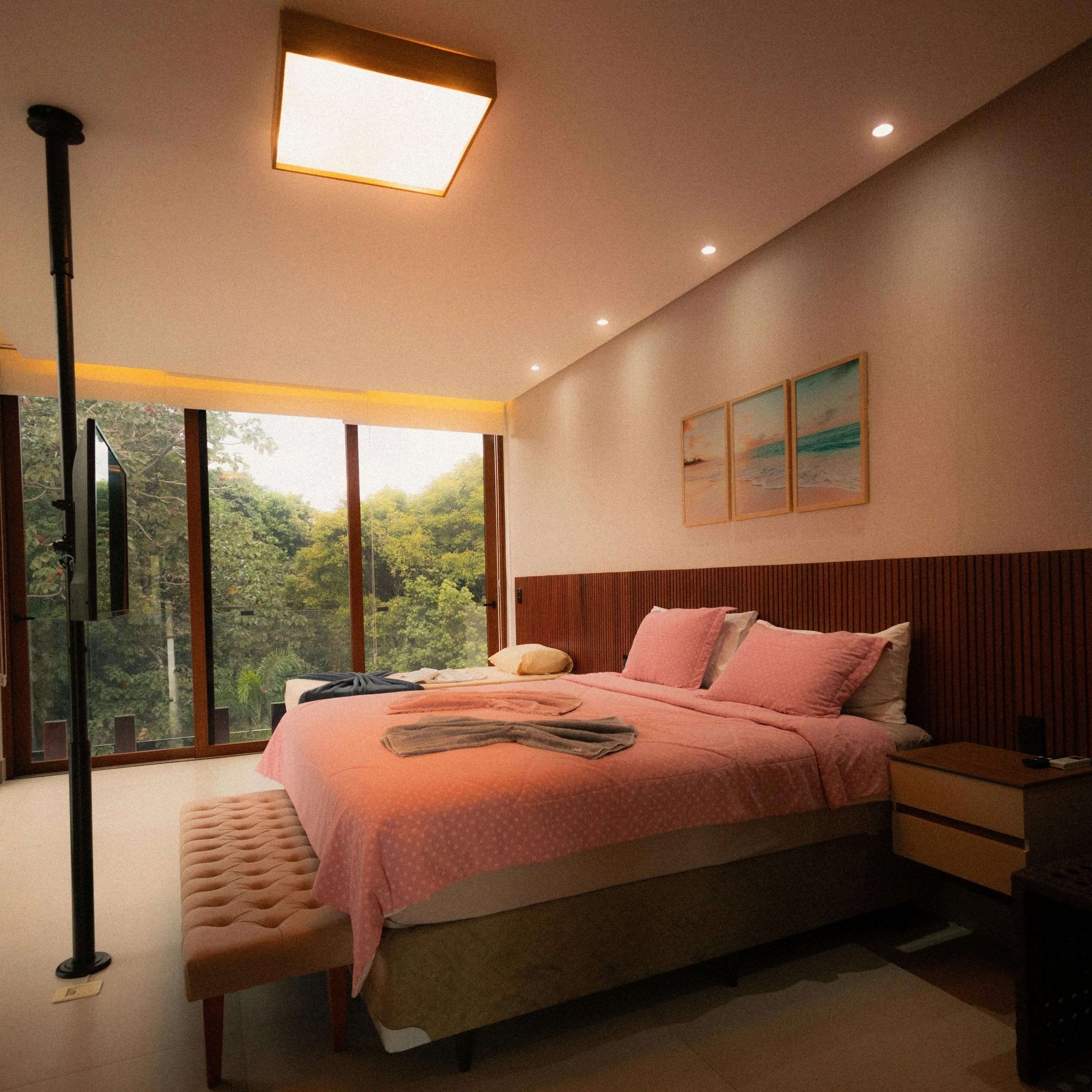
Pink Bedding Is for Everyone: Redefining a Color Beyond Gender


Why should you care about pink?
For years, pink was boxed in by outdated rules. This blog is where pink makes a break for it, shattering arbitrary labels and redefining itself. Pink is back, everyone, reclaiming its rightful place in every space.
You see, pink is the one of those colors that has this unique ability to soften a space without dulling it. Unlike beige or gray, which often fade into the background, pink brings warmth and light while still feeling deliberate. It has presence without heaviness, a quality that allows a bedroom to feel calm yet alive. When used thoughtfully, pink creates rooms that feel layered and intentional, the kind of spaces that unfold slowly rather than announcing themselves all at once.
In interiors, pink functions almost like filtered sunlight. It reflects warmth back into a room, subtly shifting how other elements are perceived. Sharp architectural lines feel gentler, darker woods appear richer, and industrial materials take on a more human quality. Pink doesn’t compete with these features; it softens their edges. Whether introduced as a broad wash across bedding or walls, or through a single accent. A lamp, a textile, a piece of art, it brings a sense of ease and visual warmth that never overwhelms.
What makes pink especially compelling is its range. From barely-there blushes to earthy clay tones and deeper, moodier roses, pink can be airy or grounded, playful or restrained. It responds easily to different aesthetics and personalities, shifting with light, texture, and scale. More than a decorative choice, pink becomes a tool for shaping atmosphere, making it one of the most flexible and quietly powerful colors to work with in a bedroom.
Table of contents
The Spectrum of Pink: Shade, Context, and Emotion


Pink is not a single statement but a spectrum of possibilities. Knowing how to work with its many shades and understanding the contexts in which they thrive can dramatically shape the atmosphere of a bedroom. Small shifts in tone, temperature, or saturation can change pink from soft and romantic to grounded, expressive, or quietly modern.
Historically, pink has been strongly associated with femininity, particularly within Western design and fashion. In interiors, it has often been used to enhance softness, intimacy, and emotional warmth. Blush-painted walls, rose-toned linens, and pale pastel accents have long appeared in bedrooms designed to feel gentle, nurturing, and serene spaces that prioritize comfort and emotional ease.
When used intentionally, pink can heighten a room’s feminine energy without slipping into cliché. Pale, powdery pinks create a cocooning effect, wrapping a space in softness and light. Warmer rose and blush tones introduce depth, lending intimacy without heaviness. These shades pair naturally with curved silhouettes, tactile fabrics like linen or velvet, and warm, diffused lighting, reinforcing a sense of fluidity and calm rather than overt decoration.
The Bubble Washed Cotton Ruffle Bedding Set is a beautiful, elegant, and feminine staple that you can add to your room.


But pink is never just one thing. It exists across a wide tonal range, from dusty mauves and muted blushes to saturated fuchsias and earthy, clay-based pinks. Each carries a distinct emotional weight. Cool pinks feel airy and delicate, while warmer, terracotta-leaning hues feel grounded and architectural. Deeper or more saturated pinks bring energy and confidence, often reading as expressive rather than soft.
- Understanding where a pink sits on this spectrum is essential. The same color can feel romantic, contemporary, or bold depending on how it’s paired with light or dark materials, smooth or textured surfaces, or minimal or layered styling. In this way, pink becomes less about gender and more about intention: a tool for shaping mood, guiding emotion, and telling a story within a space.
Redefining Masculinity: Pink as Balance and Restraint

Pink can be a classy, sophisticated, and elegant color to introduce into a room, no matter the gender. When used with restraint, it has the ability to balance a space rather than soften it, adding warmth without sentimentality. This shift is already familiar in men’s fashion, where salmon pinks, dusty roses, and muted blush tones have become staples, valued for their subtlety rather than their boldness. That same sensibility translates seamlessly into interior design.
For decades, pink was treated as a taboo within masculine spaces, an outdated association that contemporary design has increasingly dismantled. In reality, pink can be one of the most refined colors in a palette, particularly when it leans warm and grounded. Deeper shades such as salmon, clay, or muted coral feel architectural rather than decorative, reading as intentional choices rather than stylistic gestures.
- These tones pair effortlessly with traditionally “masculine” materials: dark woods, blackened or brushed metals, leather, stone, and concrete. The contrast they create is subtle but powerful. Instead of softening a room, pink introduces equilibrium; warming hard surfaces and tempering stark lines without diminishing their strength. The Minimalist Pink Striped Bedding Bundle offers a great, balanced foundation for a mens room.


Menswear offers a useful parallel. Salmon pink shirts, muted rose knits, and restrained pink tailoring add dimension without demanding attention. They work because they are confident and understated. In interiors, pink functions the same way: it doesn’t need to dominate. It can act as a counterpoint, bringing warmth to minimalist spaces or elegance to more rugged, utilitarian ones.
- In bedrooms especially, this approach allows pink to feel quietly confident; intentional, modern, and grounded. Rather than signaling softness, it suggests self-assurance and balance, proving that pink can be as composed and masculine as it is expressive.
Discover the world of pink bedding here...
Pink: A Happy Neutral

Despite its gendered history, pink can function as an unexpected neutral. Certain shades, particularly muted blushes, dusty roses, and beige-leaning pinks, behave much like warm taupes or soft tans. They bring warmth without weight, offering an alternative to traditional neutrals that can sometimes feel flat or overly familiar.
These tones recede rather than demand attention, making them especially well suited for larger surfaces such as bedding, upholstered headboards, or even walls. Pink used this way becomes a backdrop rather than a focal point. It moves easily across design styles, from pared-back minimal interiors to more layered, eclectic spaces, and pairs effortlessly with whites, grays, browns, and blacks, as well as deeper accent colors like forest green, navy, or charcoal.
- Viewed through this lens, pink becomes less about identity and more about atmosphere. It creates a sense of warmth and cohesion without dictating the room’s character outright. By staying subtle and restrained, pink allows other elements, texture, material, light, and personal objects to take the lead, quietly supporting the story the space is meant to tell.
Discover more pink bedding ideas for your room here....
Styling Pink by Intensity: From Statement to Subtle
Pink doesn’t need to be all or nothing. One of its greatest strengths is how fluidly it can scale from immersive and expressive to barely-there and atmospheric. The impact of pink in a bedroom often comes down to proportion. How much of it you use determines not just how the room looks, but how it feels.


Intense: Full Immersion
At its most saturated, pink becomes a statement. Rooms that lean fully into pink (through walls, bedding, or large upholstered pieces) feel expressive, confident, and intentionally styled. This approach works best when the shade itself has depth, whether that’s a dusty rose, clay pink, or warmer blush rather than a sugary pastel.
Because color plays such a dominant role here, balance is essential. Strong contrasting elements help ground the space: dark or natural wood flooring, blackened metals, graphic artwork, or sculptural lighting. These contrasts prevent the room from feeling overly sweet and instead give it a sense of structure and weight. When done well, an all-pink room feels immersive rather than overwhelming; bold, but still considered.

Medium: Intentional Focus
A medium approach introduces pink as a central feature without letting it take over the entire room. Think all-pink bedding layered against neutral walls, a blush rug anchoring a space filled with muted tones, or a statement headboard in a warm rose hue.
This level of intensity feels deliberate but approachable. Pink clearly plays a leading role, yet it leaves room for contrast and variation through surrounding materials and textures. It’s an ideal balance for those who want color without committing to a fully immersive look; expressive enough to feel styled, restrained enough to remain timeless.


Light: Subtle Accents
For those hesitant to commit, pink works beautifully in small, thoughtful doses. A table lamp, throw blanket, pillow, rug, or framed artwork can subtly shift the tone of a bedroom without redefining it. These accents act almost like punctuation, small moments of warmth that soften a space and add visual interest.
Light applications of pink are especially effective in minimal or neutral rooms, where even a single element can change how the entire space is perceived. The color becomes an undertone rather than a feature, adding depth and personality while allowing the room’s existing palette and materials to remain front and center. A great way to add a sublte accent is to include a throw blanket like the Helena Jacquard Throw Blanket
Find More of Ever Lastings Pink Bedding Options Here...
How Pink Can Tell a Story

Color is one of the most powerful narrative tools in interior design, and pink is especially expressive. Its emotional range allows it to communicate mood before a room is even fully taken in. A dusty rose palette can suggest calm and introspection, creating a space that feels inward-looking and restorative. Warmer coral or clay-leaning pinks, on the other hand, introduce a sense of creativity and energy, lending movement and warmth to a room without overwhelming it.
The way pink appears adds further layers to that story. Matte walls feel soft and enveloping, while pink rendered in linen, velvet, or worn cotton carries a more tactile, lived-in quality. Polished ceramics or lacquered finishes read as deliberate and refined. Even light plays a role, pink shifts throughout the day, warming in evening light and feeling lighter and airier in the morning, subtly changing the mood of the space as time passes.


In bedrooms, especially, pink often reflects emotional intention. It can signal softness after a long day, offering a sense of comfort and release. In more minimal spaces, it introduces warmth and humanity. In otherwise restrained rooms, it can add a note of playfulness or curiosity without disrupting the overall calm. Pink can suggest openness and individuality, or even act as a quiet rebellion against rigid design norms and expectations.
Rather than asking whether pink “fits” a space, the more compelling question is what kind of story you want your bedroom to tell; and whether pink helps articulate that narrative. When used with intention, pink becomes less about color choice and more about emotional expression, shaping how a room feels to inhabit, not just how it looks.
Final Thoughts: Pink is a Strong Tool


Pink is no longer confined to one gender, one mood, or one aesthetic. It is a color that adapts, softening sharp lines, grounding minimal spaces, energizing neutral palettes, or quietly balancing a room that feels too stark. Its effect is never fixed; it shifts depending on shade, texture, and context. When freed from outdated associations, pink reveals itself as one of the most versatile and emotionally intelligent tools in bedroom design.
Whether bold or barely there, pink invites curiosity. It encourages us to look again, at color, at space, and at the assumptions we bring into our homes. Rather than signaling a specific identity, pink becomes an expression of intention: how a room is meant to feel, not who it is meant for. In embracing pink on our own terms, we open up space for interiors that are more personal, layered, and quietly confident.
Explore our Pink Collection designed with sustainable options to support the body’s natural transitions through breathable materials, calming textures, and rest-first construction.
Fabric Guide: Summary
Pink isn't one color; it is a spectrum
The impact and story it tells depend on the shade, context, and proportion
Used thoughtfully, pink brings warmth, light, and emotional depth to a bedroom, making it not just styled but lived in.
More Fabric Guides:


FAQs
What type of bedding fabrics are best for the winter and holiday season?
Flannel, brushed cotton, and linen blends are ideal — they’re cozy, breathable, and keep warmth without overheating.
How do I layer bedding for colder nights?
Start with soft cotton sheets, add a mid-weight duvet, and top with a textured throw or blanket. Mixing materials adds both warmth and visual depth.
What makes a bedding set a good gift for the holidays?
Look for high-quality fabrics, timeless colors, and soft textures. Gift sets that come in elegant packaging or with coordinating pieces feel more thoughtful.
How can I style holiday bedding without it looking too over-the-top?
Choose subtle festive tones (warm neutrals, deep reds, forest greens) and pair them with solid or textured layers instead of bold prints.
Anything we missed?
Thanks for reading till the end — we hope it brought a little calm and inspiration to your day.
Discover more: Inspiration Blog • New Arrivals •
Stay tuned for our next story, or share this one to spread the calm.
• Share your makeover moments with #EverLastingMakeover and tag @EverLastingFabric
Connect with us:
modern man modern man modern man modern man modern man modern man modern man modern man modern man modern man modern man modern man


