Fabric Longevity: How to Prevent Pilling, Fading and Stiffness
There’s nothing quite like the feeling of freshly made bedding; smooth against the skin, rich in color, fluid in movement. But over time, even beautiful fabrics can begin to change. Small pills appear. Colors lose their depth. Sheets that once draped effortlessly start to feel stiff or dry.
Many people assume this kind of wear is inevitable; that bedding simply has a lifespan and deterioration is part of the process. In reality, most common fabric issues are not signs of poor quality alone. They are often the result of friction, heat, chemical buildup, and everyday care habits that slowly weaken fibers.
Understanding what causes pilling, fading, and stiffness allows you to interrupt that cycle. When you approach washing, drying, and storage with intention, you dramatically improve fabric longevity, preserving not just the appearance of your bedding, but its texture, flexibility, and overall performance.
Fabric longevity isn’t about keeping sheets frozen in time. Natural fibers are meant to evolve. Cotton softens. Linen relaxes. Color settles gently. The goal is to allow fabrics to age beautifully rather than prematurely.
In this guide, we’ll break down the true causes of wear and walk through practical, science-backed steps to help your bedding remain smooth, vibrant, and flexible for years to come and teach you about fabric longevity.
Pilling occurs when loose fibers tangle together on the surface of fabric, forming small balls. This is typically caused by:
Friction in the wash (overloading machines, rough cycles)
Low-quality short fibers
Mixing bedding with abrasive items like towels or denim
Excessive heat in dryers
Natural fibers like cotton and linen can pill, especially early in their life cycle, but high-quality long-staple fibers pill less and improve over time.
Preventative Measures to Increase Fabric Longevity
Protect from Sun Damage
Air drying bedding outdoors feels timeless and natural, and it can be wonderful for freshness. However, prolonged exposure to direct sunlight can quietly shorten fabric longevity.
Ultraviolet (UV) rays break down dye molecules and weaken fibers over time. While this isn’t immediately visible, repeated sun exposure can lead to:
Gradual fading, especially in darker or richly dyed fabrics
Uneven discoloration
Increased fiber brittleness
Loss of softness and flexibility
Natural fibers like cotton and linen are particularly susceptible to UV damage when exposed for long periods.
If you prefer outdoor drying, you don’t have to give it up; just be strategic:
Turn items inside out to protect visible surfaces and preserve color depth
Avoid peak sun hours (typically 10 a.m.–3 p.m.), when UV intensity is strongest
Limit drying time remove bedding once dry rather than leaving it out all day
Rotate linens regularly so the same set isn’t repeatedly exposed
If possible, dry bedding in partial shade or indirect sunlight. You’ll still enjoy the fresh-air effect without compromising fabric longevity.
Pilling is often most noticeable in the first several months of a fabric’s life. It occurs when loose surface fibers tangle together due to friction. While it can look concerning, early pilling does not necessarily mean the fabric is low quality.
The key to protecting fabric longevity is addressing pilling before it progresses.
If pilling occurs:
Use a fabric shaver gently, moving lightly across the surface without pressing down
Avoid pulling pills by hand, which can stretch or tear intact fibers
Wash on a delicate cycle afterward to remove any loosened fragments
Dry on low heat or air dry to prevent further agitation
Early maintenance removes weak surface fibers and helps stabilize the fabric structure. Once those excess fibers are cleared, high-quality bedding often becomes smoother and more resistant to future pilling.
Remember: pilling is a surface issue. Aggressive handling causes structural damage. Gentle correction preserves the integrity of the weave and supports long-term fabric longevity.
View the Ever Lasting Everyday Luxury collection to find fabric longevity.
Key pieces for fabric longevity...
Being Concious of Bedding Maintenance
Rotate Your Bedding
One of the simplest and most overlooked ways to extend fabric longevity is rotation.
Using the same set of sheets continuously concentrates all friction, washing, body oils, and environmental exposure on one set of fibers. Even high-quality fabrics need time to rest and recover their natural structure.
Rotating between two or three sets:
Reduces cumulative friction damage
Prevents excessive thinning in high-contact areas
Maintains elasticity and drape
Allows fibers to relax between washes
Think of bedding like footwear; wearing the same pair daily causes faster breakdown than alternating between pairs. Rotation also improves your overall bedroom experience. Fresh sheets feel noticeably smoother when they haven’t been in constant use, and each set retains its vibrancy longer.
For optimal fabric longevity, aim to:
Wash and fully dry one set before storing
Store in a cool, dry place
Avoid tightly compressing fabrics for long periods
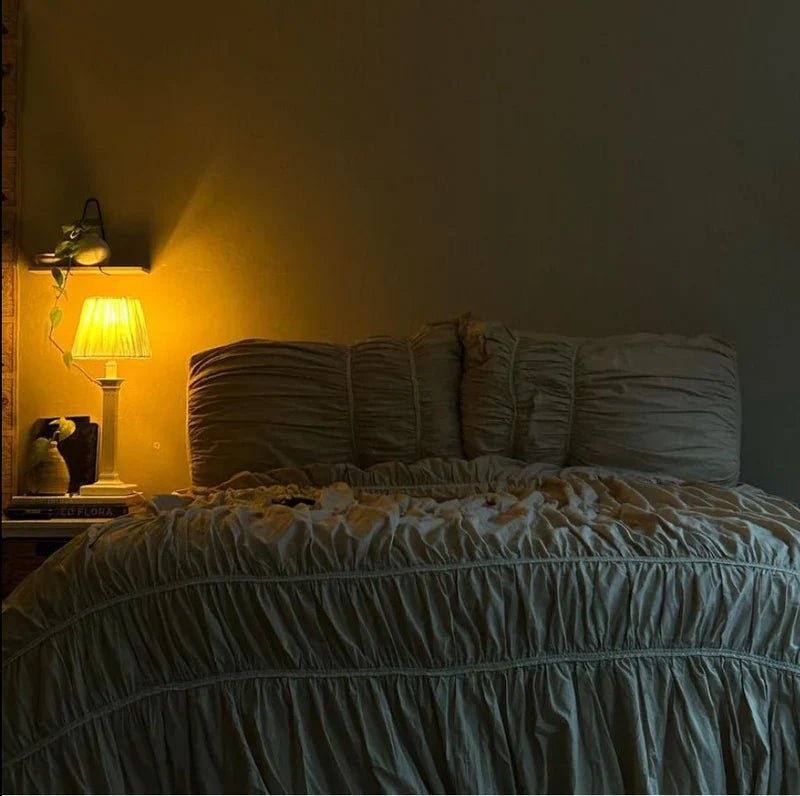
This small habit significantly extends the life and performance of your bedding. Bring some light into your room with the Marshmallow Puff Ruffle Bedding Set
Prevent Detergent and Mineral Buildup
Not all fabric damage is visible at first. One of the most common and least discussed threats to fabric longevity is buildup.
Over time, detergent residue, body oils, and hard water minerals can accumulate within fibers. This buildup creates several problems:
Sheets feel stiff or rough instead of fluid
Colors appear dull rather than vibrant
Breathability decreases
Fibers become more prone to friction and pilling
In hard water areas especially, mineral deposits can bind to fabric, leaving bedding feeling heavy or slightly crunchy even after washing.
To prevent buildup:
Use the correct amount of detergent (often less than recommended on the bottle)
Choose a mild, low-residue formula
Run an occasional rinse-only cycle to flush out trapped soap
Add ½ cup of white vinegar to the rinse cycle once a month to naturally dissolve residue
Avoid fabric softeners, which coat fibers rather than soften them
If bedding already feels stiff, a “reset wash” can help restore flexibility:
Wash in warm water without detergent.
Add vinegar to the rinse cycle.
Dry on low heat or air dry.
This clears accumulated film and allows fibers to relax back into their natural state.
Maintaining clean, residue-free fibers helps bedding remain soft, vibrant, and flexible, all essential components of long-term fabric longevity.
Discover pieces with strong fabric longevity here...
Why Fabric Longevity Matters: And How to Choose With It in Mind
Fabric longevity isn’t just about making bedding last longer. It’s about preserving comfort, protecting your investment, and reducing unnecessary waste.
When bedding wears out prematurely, it’s rarely because it reached its natural lifespan. More often, it’s the result of fiber quality, harsh care habits, or materials that weren’t designed for durability in the first place. Choosing and caring for fabrics with longevity in mind means fewer replacements, more consistent comfort, and a more sustainable approach to your home.
High-quality bedding doesn’t just survive over time, it improves. Natural fibers soften, relax, and develop character when properly maintained. Instead of becoming rough or faded, they settle into a lived-in smoothness that feels intentional.
Pieces like the Juliana Jacquard Bedding Set are great additions to your room due to its combination of quality and quiet luxury aesthetic.
When selecting fabrics, consider:
Fiber length and quality (long-staple cotton resists pilling better than short fibers)
Weave structure (tighter weaves tend to be more durable, while looser weaves may require gentler care)
Natural breathability (fabrics that regulate moisture reduce stress on fibers)
Care compatibility (choose materials that align with how you realistically wash and dry)
Linen, for example, is known for its strength and ability to soften over time. Long-staple cotton maintains smoothness with proper low-heat care. TENCEL™ resists surface friction and retains color well when washed gently. Understanding how a fabric behaves allows you to support its longevity rather than work against it.
Ultimately, fabric longevity is a mindset. It begins at purchase, choosing materials thoughtfully, and continues in the everyday rituals of washing, drying, and rotating.
When quality selection meets intentional care, bedding doesn’t just last longer. It ages beautifully.
Find the best fabrics for fabric longevity here...
Final Thoughts
Pilling, fading, and stiffness aren’t inevitable; they’re often the result of friction, heat, and buildup that slowly weaken fibers over time. When you understand what causes wear, you can care for your bedding in ways that protect its texture, color, and flexibility.
Fabric longevity is built through simple, thoughtful habits and by choosing materials designed to age well from the start. The goal isn’t to prevent change, but to allow fabrics to evolve beautifully, softening rather than stiffening, settling rather than fading.
With mindful selection and gentle care, your bedding won’t just last longer. It will feel better, look richer, and continue to perform the way it was meant to for years to come.
Thinking of redecorating? Check out Anna Bernice's Berlin room for more inspiration.
Pilling, fading, and stiffness are typically caused by friction, heat, UV exposure, and residue buildup; not just time.
Care habits determine fabric longevity
Gentle washing, low-heat drying, sun protection, rotation, and early maintenance significantly extend the life of bedding.
Choose fabrics designed to age well
High-quality, long-staple and breathable fibers maintain smoothness, color, and flexibility when cared for intentionally.
What’s the best way to maintain privacy in a shared space?
Define soft boundaries with rugs, curtains, or furniture placement. Even visual cues — like a personal chair or corner — help maintain comfort while keeping the room open and inviting.
How can couples or roommates handle different sleep or light preferences?
Layered lighting is key. Use bedside lamps or dimmable lights for personal control. Eye masks and blackout curtains (like Everlasting’s cozy sleep sets) also create individualized rest zones.
How do I make a shared bedroom feel personal without overwhelming the other person’s style?
Start with a calm base palette, then layer in individuality through accents — throws, framed photos, or personalized pajamas and slippers. Subtle details add intimacy without clutter.
How often should a shared room be refreshed or redecorated?
Seasonal refreshes are ideal. Switch bedding, rearrange décor, or introduce a new scent or plant. These changes keep energy flowing and the environment emotionally fresh.
Bedding quality depends on multiple fabric metrics, but not all specifications marketed on labels actually impact your sleep experience. Understanding which measurements—GSM (grams per square meter...
Ever Lasting designs thoughtful home essentials that bring a quiet sense of calm to everyday life. Made with long-lasting natural materials and refined to soften with time, our pieces are created for comfort that’s meant to be lived in and loved, for years.
Join the bedroom makeover. Share your space with us using #EverLastingFabric on Instagram and Facebook.
Your wishlist
Please add product to your wishlist to see them here.